Chinese journalists attacked by profiteers in Hainan

Southern Daily front page 17 july 2013

Journalists from the Nanguo Metropolis Daily 南国都市报 from Hainan went yesterday to investigate claims of fraudulent activities by a company in Hainan. They emerged with only a few scratches to their cameras, but their colleague from Hainan Live TV was not so fortunate, sustaining injuries to his face and hands after being beaten up when attempting to record an interview at the company’s offices.

Today the front page of the Nanguo Metropolis Daily from Hainan published a large picture of the fallen journalist with a headline screaming, “Journalists mobbed during interview.”

The story started on 16 July when a certain Ms Zheng, who works for a company based in the city of Haikou, reported a tip to the Nanguo Metropolis Daily after she was duped into buying a false domain name. Zheng’s company had received an invitation, first by fax and later by phone, to a meeting of experts on commercial management best practice.  As her boss was out of town, Ms Zheng went in his place.

After the “experts” at the meeting had concluded their speeches, Ms Zheng found herself surrounded by “seven or eight” men, who demanded that she take part in their “investment plan.” They wanted her to spend 4,000 yuan out of her own pocket to buy up a domain name related to real estate and travel. Zheng did not want to take part in this scheme, so she said that she did not have any money with her, and that her bank card did not have the requisite 4,000 yuan. But the men talked her into a daze and in the end she handed over her bank card, and they used a POS machine to extract 5,000 yuan from her account in return for the domain name.

Ms Zheng subsequently found out that the company which had forcibly sold her the domain name was actually called Yunzhi Information Technology, and based in Haikou. Zheng’s manager contacted the company and demanded that they return the money, but Yunzhi refused to do so. Zheng then contacted the Nanguo Metropolis Daily.

Immediately after the tip came in, journalists from the Nanguo Metropolis Daily as well as South Sea Online 南海网 and Hainan Live TV 直播海南 rushed to Yunzhi, who refused requests for an interview. This is when things escalated. One manager rushed over and blocked Hainan Live TV cameras. He then snatched the camera off the Hainan TV cameraman, and pushed him to the ground before brandishing his fist and punching the unfortunate man in the face.  The manager then made off with the camera, before coming back, still carrying the camera and shouting at the journalists, “This company does not permit photography, and we don’t want any gossip going around about us!”

Eventually, police intervened. Confronted with evidence of injuries to the cameraman and damage to cameras, the manager of Yunzhi claimed that he too had been hit. When the journalists demanded that he show his injuries, this well-dressed man was unable to do so. It also emerged that one staff writer for the Nanguo Metropolis Daily had attempted to contact the police earlier on, but had been blocked from leaving Yunzhi’s offices, located in a residential building, by a man who had said fiercely, “Coming and going as you please? It’s not as easy as that!”

The Superintendent of Haikou’s Longhua district, who had rushed over to the Jinmao police station when he heard what was going on, said that they “will certainly administer severe punishment for impeding interviews and beating up journalists.” Whether or not this case goes to court, the incident appears to have spelled the end for Yunzhi Information Technology. Any trace of the company online has vanished, according to Nanguo Metropolis Daily journalists.

Links and sources
Nanguo Metropolis Daily (南国都市报): 大肆行骗?猖狂至极!

Posted in Crime and Corruption, Front Page of the Day | Tagged | Comments Off on Chinese journalists attacked by profiteers in Hainan

The hidden dangers of squirt guns

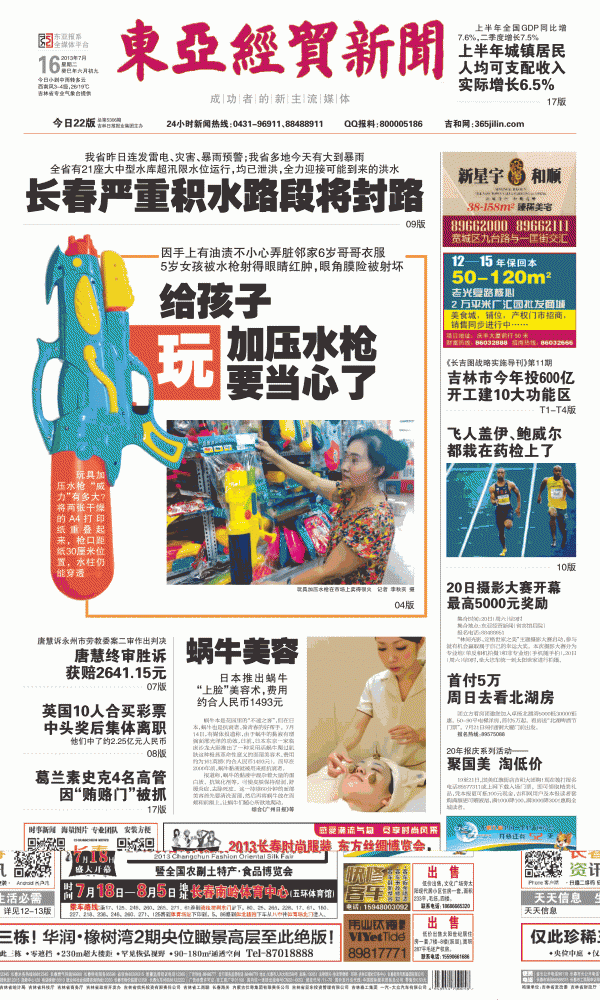
July 16 -- 东亚经贸新闻报

An incident involving two children and a squirt gun caused the East Asia Economy and Trade News (东亚经贸新闻报) from Jilin province to shine a spotlight today on the potentially grave danger posed by water squirt guns. As evening approached on Sunday in the city of Changchun, two children were playing near their apartment building, one toting the toy gun in question. Before the day was out, the other child was in the hospital, prompting the paper to launch an investigation into the types and potential dangers of squirt guns as well as relevant safety regulations. Turns out these toys are much more dangerous than you may think. 

East Asia Economy and Trade News‘s front page informs us that a five year-old girl, pseudonym Yueyue 悦悦, and a six year-old boy, pseudonym Songsong 嵩嵩, were playing relatively unattended at the foot of their apartment building while Yueyue’s mother chatted with a neighbor at a distance. At approximately six o’clock, Yueyue, whose hands were still oily from eating, reached out to Songsong, dirtying his clothes. In retaliation, Songsong fired at Yueyue with his toy squirt gun, hitting her in the eyes. Yueyue was soon crying inconsolably and her mother, Ms. Zhao, noticed that her daughter’s eyes were red and swollen and immediately whisked her away to the nearby Norman Bethune Hospital Number Two.

According to the ophthalmologist who examined Yueyue, the force of the squirt gun had ruptured her cornea, causing severe ocular inflammation and swelling. However, after only a few days of treatment, Yueyue’s condition stabilized.

The incident prompted the East Asia Economy and Trade News to launch an investigation. At a local wholesale toy market, more than twenty different vendors were found to be selling some thirty varieties of squirt guns, often for as little as five yuan. All of the toy squirt guns displayed a “3C” on the packaging, indicating that they were safe for children three years or older. According to one vendor, all of the squirt guns he buys carry the ’3C’ marking, and the bad quality ones are avoided because they “pose a hidden danger” (安全隐患)”.

Citing a similar investigation by another newspaper, the City Journal (城市信报), East Asia Economy and Trade News questioned whether even squirt guns of quality “3C” can be trusted. Last year, City Journalreporters conducted experiments with water guns similarly purchased at a wholesale toy market. The reporters were able to completely pierce one sheet of A4 paper from a distance of one meter and two sheets from a distance of thirty centimeters in only two seconds. Using a pump-style water gun, the reporters were able to shoot a hole through no less than four sheets of paper. The conclusion? “Toy guns don’t just imitate real guns, they can actually harm people, too”.

Also making headlines on today’s East Asia Economy and Trade News front page is a report that at one Japanese spa, customers are going in for snails. According to the report, ‘Snail Facial’ (蜗牛美容) mixes snail-goo with large amounts of protein, anti-oxidants, and other materials for a 1,500 yuan treatment that can keep your skin “warm and gentle, can soothe inflammation, and eliminate dead skin”.

Links and Sources
East Asia Economy and Trade News (东亚经贸新闻报):给孩子玩加压水枪要当心了
City Journal (城市信报):儿童水枪这威力轻松穿透4张A4纸

Posted in Consumer Culture, Front Page of the Day | Tagged | Comments Off on The hidden dangers of squirt guns

Zhejiang Plane Crash Victims: “Good Riddance!”

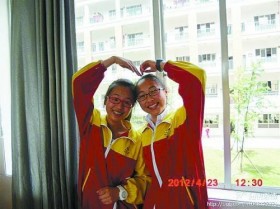
叶梦圆+王琳佳In recent days, controversy has swirled around the backgrounds of Wang Linjia 王琳佳 and Ye Mengyuan 叶梦圆, the two Zhejiang middle school students who died in Saturday’s San Francisco plane crash, with some Chinese netizens saying: “good riddance” (好死了). While scrubbing of unsavory content from sites like Sina Weibo can make it difficult to gauge what portion of Chinese web users evinced happiness at the girls’ untimely death, one commenter on NetEase, one of China’s largest news portals, was far from alone in saying “a traitor in disguise is still a traitor, and most traitors to China are the children of the corrupt or tax-evaders – those who have become wealthy immorally. We’ll let God decide their punishment.”

Recalling a similar incident a year ago when the death of two Chinese students at the University of Southern California (who were gunned down off campus) inflamed populist anger on the Chinese Internet when it was revealed that they were killed while driving a BMW, the seeming luxury of an international summer camp, along with a number of details about the girls’ background have inspired numerous micro-bloggers and commenters on popular news portals to write the girls off as fuerdai (富二代), or “second-generation rich”. In a country increasingly defined by inequality, the fuerdai, and their close counterpart, guanerdai(官二代), the offspring of elite cadres, have earned a let-them-eat-cake reputation among average Chinese for indulging in sleek cars, lavish apartments, and wild parties.

Nearly nine hundred comments were posted beneath an article on NetEase entitled “Aviation Catastrophe Victim Ye Mengyuan: Master of the Four Arts of the Scholar” (空难遇难浙江女生叶梦圆:琴棋书画样样精通), which celebrated Ye Mengyuan and Wang Linjia as friends and outstanding students since their days at junior middle school. The article prominently featured Ye Mengyuan’s singing prowess and status as a “level ten” (十级) pianist as well as Wang Linjia’s three consecutive terms as class president (班长) and excellent calligraphy – for some, perhaps too prominently. The top comment on the article cynically asked, “Why emphasize their great calligraphy and level ten piano abilities? Isn’t it still a tragedy if a bad student dies? Or does it not matter?”

Most of those critical of the girls honed in on the cost of the summer study program (30,000 yuan, more than the median yearly income in China’s poorer provinces), and Wang Linjia’s tenure as class president as proof that the girls were not common folk. One commenter captured the outrage:

Of course a bad student deserves to die; all of us losers are from the countryside. Don’t even ask about level ten piano – the only music I know is that of an iron smelter. Those who are supposed to die are us – the common folks. It’s summer vacation and I’m working; I want to go to America too, but I don’t have money or a sugar daddy, and I still don’t know where the tuition for my next semester is going to come from. You city kids have all the advantages: when we go home after school, we have to put the cows to pasture and carry water; you guys just flirt all day. My god, one piano must cost more than what my family makes from quite a few years of rice harvests.

Microblogger “Li_Geng”, in a highly re-posted comment on Sina Weibo, derided the rest of the nearly eleven thousand commentson NetEase about the plane crash: “It is said that on NetEase, 50% of the comments pray for the girls, 30% hurl abuse at corruption, and 20% clap their hands in glee.”

A seemingly louder faction of web users joined Li_Geng and jumped to the girls’ defense. Many argued that most Chinese, not only the rich, can afford international travel today; others noted that often students educated overseas have parents bitterly toiling at home to scrape together tuition. The lion’s share, however, denounced the other side for reveling in other people’s death, especially the deaths of two such girls. As “San3-San3”, a micro-blogger on Sina Weibo put it:

Nowadays, as soon as there’s any kind of plane crash, especially abroad, there’s a group of people who will accuse students studying abroad of being fuerdai or guanerdai. They say that these students are stealing the few opportunities there are away from the babies of China’s poverty-stricken commoners, so it’s better that their dead; they say that it’s best that these victims be students abroad or the children of Cadres. All I can say is that those of you who think like this will never make a future for yourselves.

Links and Sources

Beijing Morning Post 北京晨报: 空难遇难浙江女生叶梦圆:琴棋书画样样精通
Image from Tencent Microblog via China Youth Daily 中国青年报: 花谢旧金山
Sina Weibo 新浪微博: The Weibo Account of San3-San3
Sina Weibo 新浪微博: The Weibo Account of Li_Geng

Posted in Internet and Media | Tagged | Comments Off on Zhejiang Plane Crash Victims: “Good Riddance!”

42 patients escape from mental hospital in Guangxi

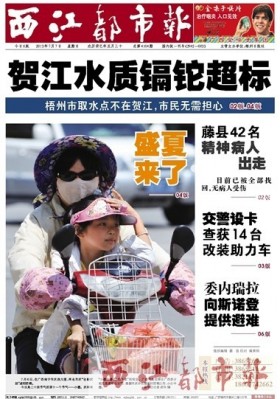
Only a brief mention on the top-right for the hospital escape, with the bulk of the front page taken up by a photo titled "The Height of Summer has come!"On the evening of July 5th, 42 mental patients escaped from the No. 3 People’s Hospital in Teng county, Wuzhou, Guangxi province. A search was carried out, and all 42 patients were relocated by 7:33 am the following morning. Only yesterday, four days after the last patient was recaptured, was this incident featured in the People’s Daily in a report which bears strong similarities to an article that appeared back on July 8th in Southern Weekly 南方周末. 

This story was first broken on July 7th by the Wuzhou-based Xijiang City News 西江都市报 (see featured image), which reported that none of the escapees had suffered any harm or any other “out of the ordinary” treatment during their punishment. The Teng county Propaganda Department told journalists from this newspaper that several patients first seized a nurse before taking her keys, cellphone and cash. After they opened the door and escaped, other patients followed them. Some patients managed to secure car rides into central Wuzhou, but according to the Xijiang City News, passers-by saw that the patients were acting strangely and alerted members of the 400-strong search team, which was drafted together mostly from the the Wuzhou police forces. The search was concluded when the last patients were found early in the morning on Taiyang Square 太阳广场 in central Wuzhou.

But why did the patients seek to escape? The Southern Weekly took up this question on July 8th. The Guangzhou-based paper secured an interview with No. 3 Hospital’s deputy director Hu Chaoyuan 胡超远. According to Hu, the patients who led the escape were suffering from schizophrenia, and were also predisposed to a violent temperament.

But Hu did not try to pin all of the blame on the patients. He also admitted that one problem was a fragile security system. Chinese health authorities have been aware of this problem since at least July 2012, when the Health Ministry released a new set of guidelines targeted at strengthening security not only at specialist mental health hospitals but also at mental health departments in general hospitals. The guidelines required all hospitals to put together a feasible security plan. Hospitals were also required to employ security personnel, and to install video monitoring equipment and emergency alarm systems in areas where mental health patients are treated. The guidelines also called for all facilities treating mental health patients to draw up contingency plans for dealing with violent patients, or patients who attempted to commit suidice, escape, attack people or damage property.

Hospital authorities in Wuzhou also listed overcrowding and a poor environment as reasons for the July 5th escape. The Beijing News 新京报 reported in 2009 that there are more than 100 million mental health patients in China. Health News 健康报, published by the Health Ministry, announced on World Mental Health Day in 2012 that there are only 1.58 beds in mental health wards per 10,000 citizens in China, compared with a global average of 4.36. According to Kong Lingzhi 孔灵芝, the author of the Health Newsreport, there is also a severe shortage in mental health personnel. At the moment there are only 20,000 doctors and 35,000 nurses specializing in mental healthcare in the whole of China. Kong also said that there has been some investment in improving mental healthcare provision in recent years, but the Wuzhou escape shows that work on improving mental heathcare in China is still a long way from complete.

Links and sources
People’s Daily Online (人民网): 广西藤县42名精神病人脱管细节曝光 医院软硬设施亟需完善
Xijiang City News (西江都市报): 藤县42名精神病人晚上出走
Southern Weekly (南方周末) “飞越疯人院”现实版上演 广西42名精神病人暴力脱管 目前已全部找回
New mental healthcare guidelines published in 2012 by Jiangxi Department of Health (江西卫生厅)(转发卫生部办公厅关于加强精神病医院安全保卫工作的通知)
Beijing News (新京报): 中国各类精神疾病患者逾亿
Health News (健康报): 卫部确定精神卫生日宣传要点

Posted in Front Page of the Day, Health and Medicine | Tagged | Comments Off on 42 patients escape from mental hospital in Guangxi

San Francisco plane crash and the death of two Chinese girls

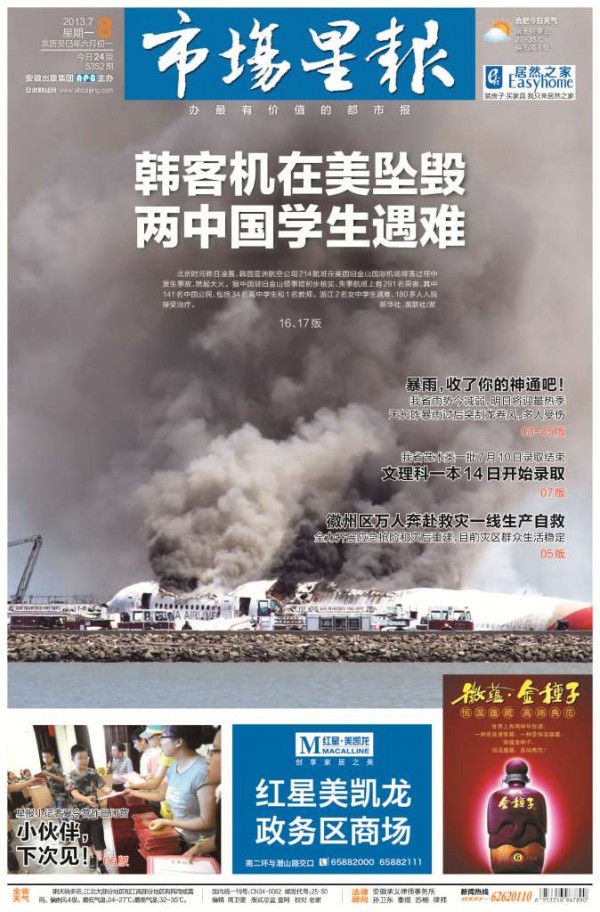
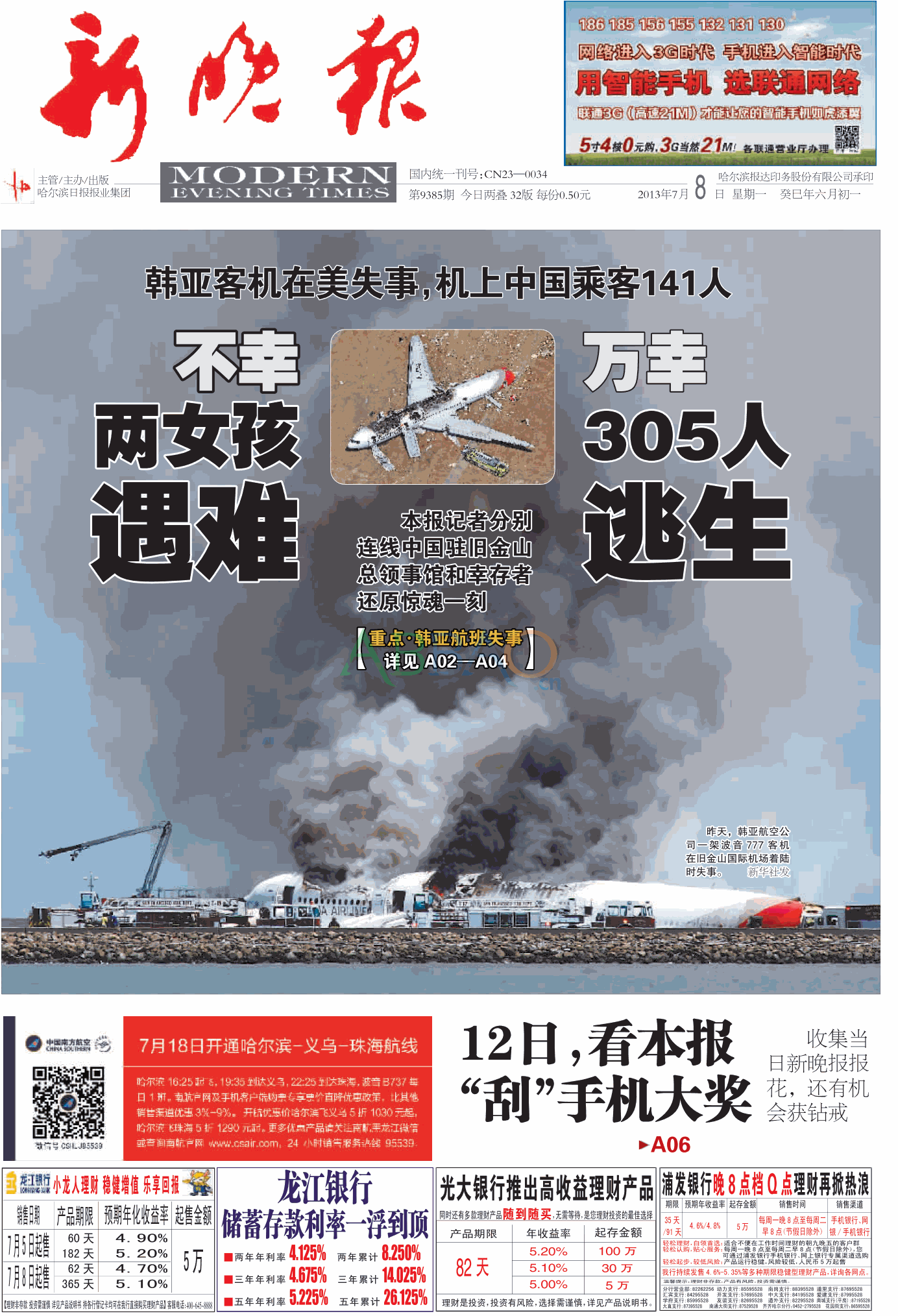
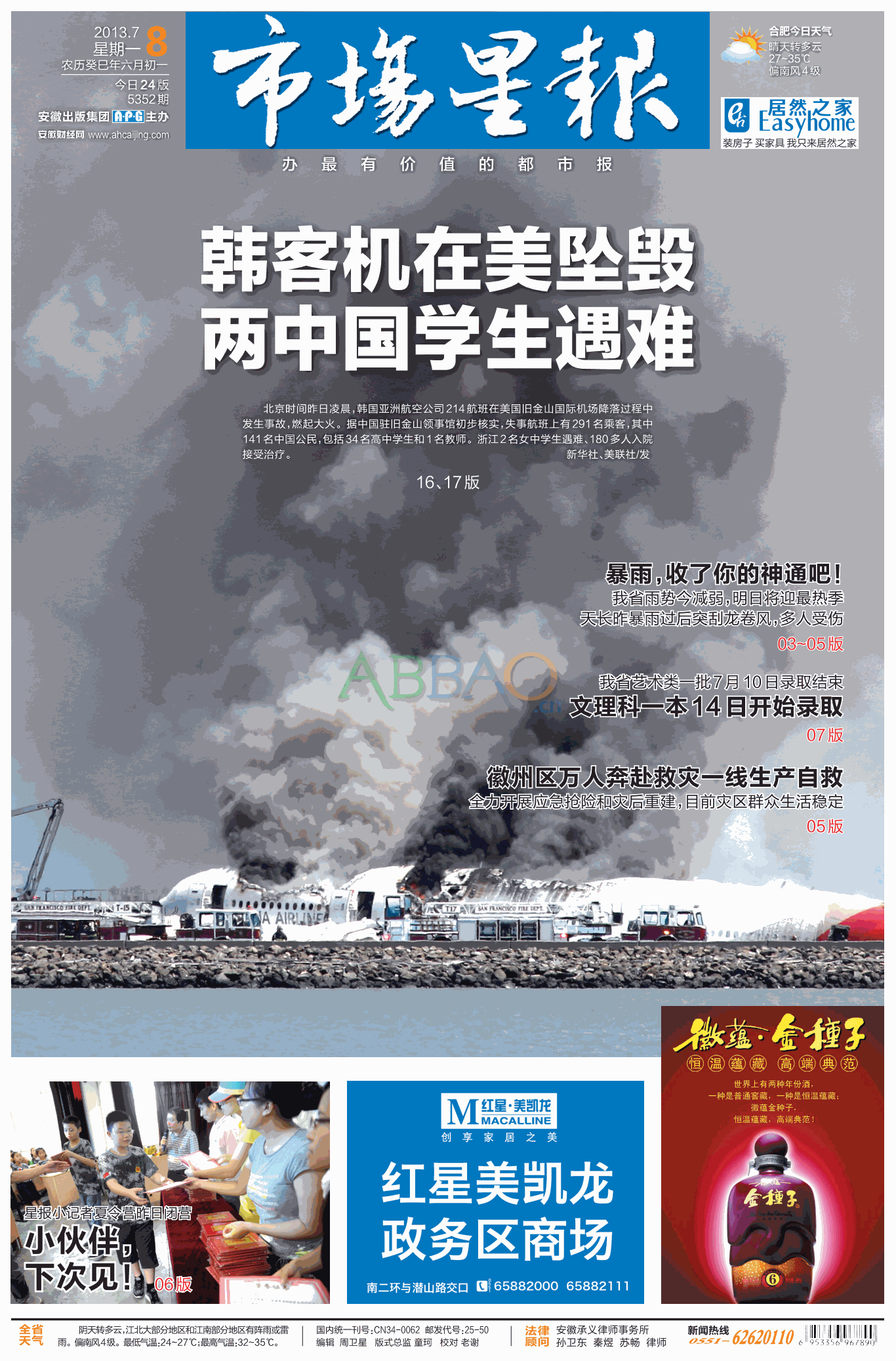
Shichang Xingbao 8Jul

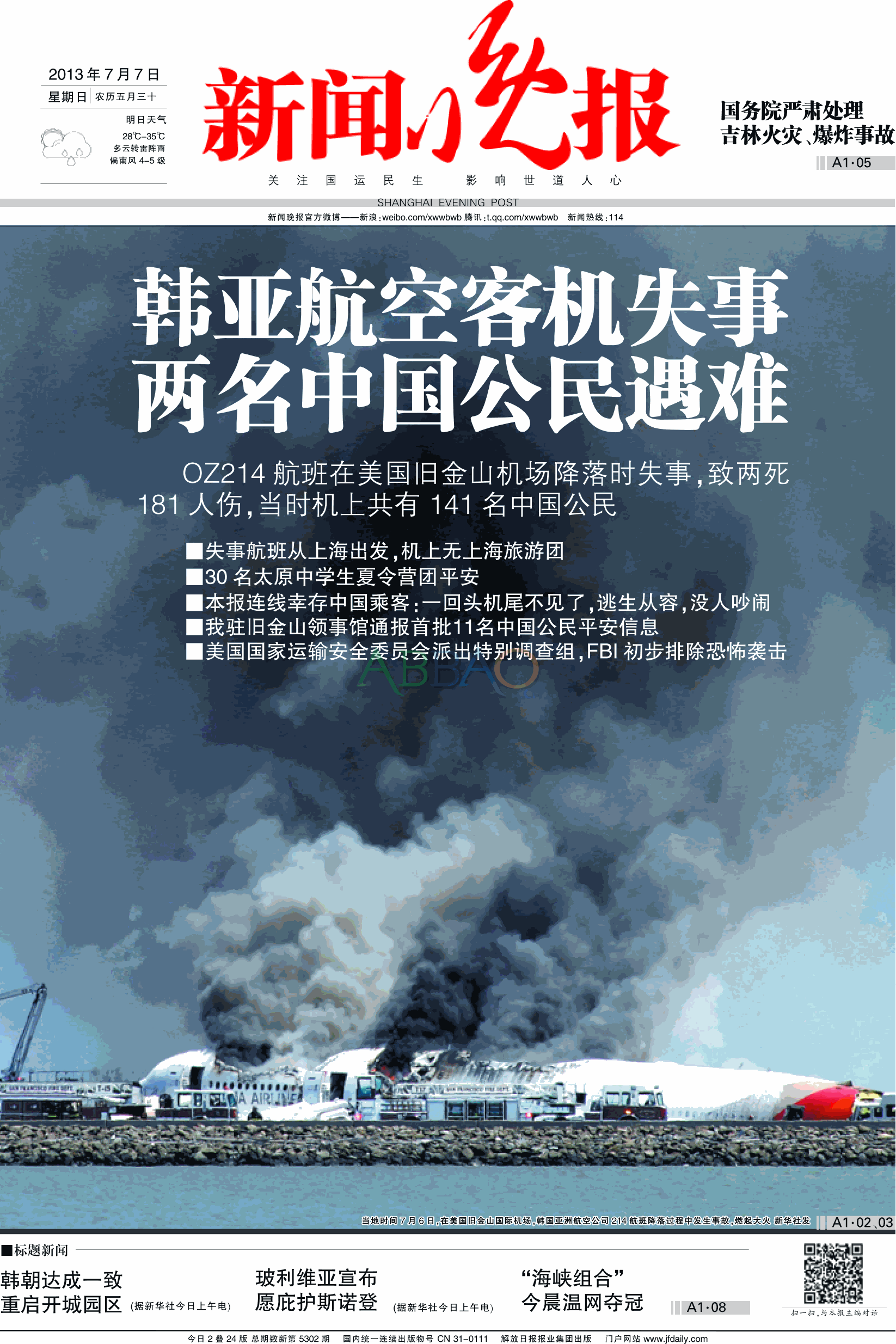
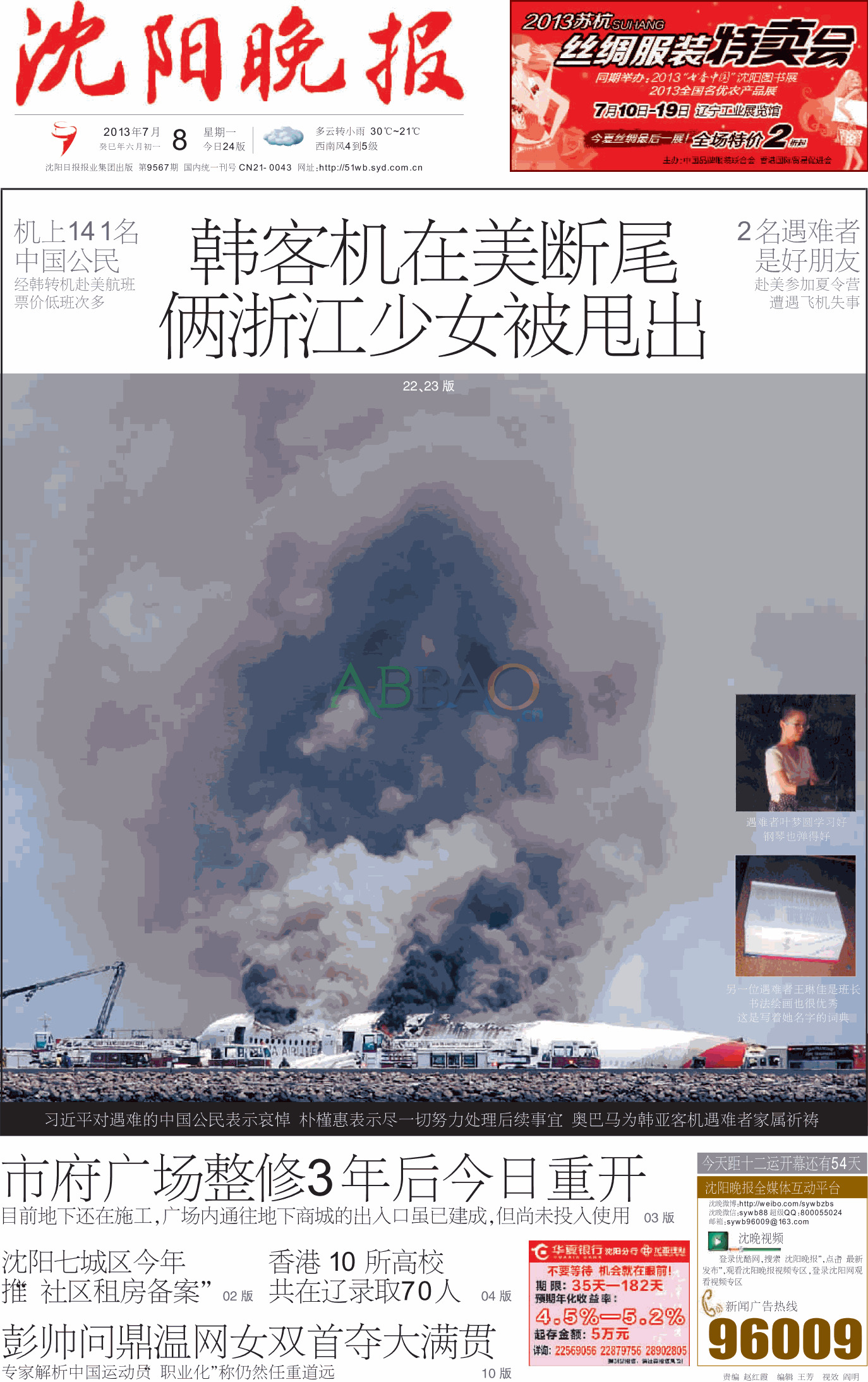
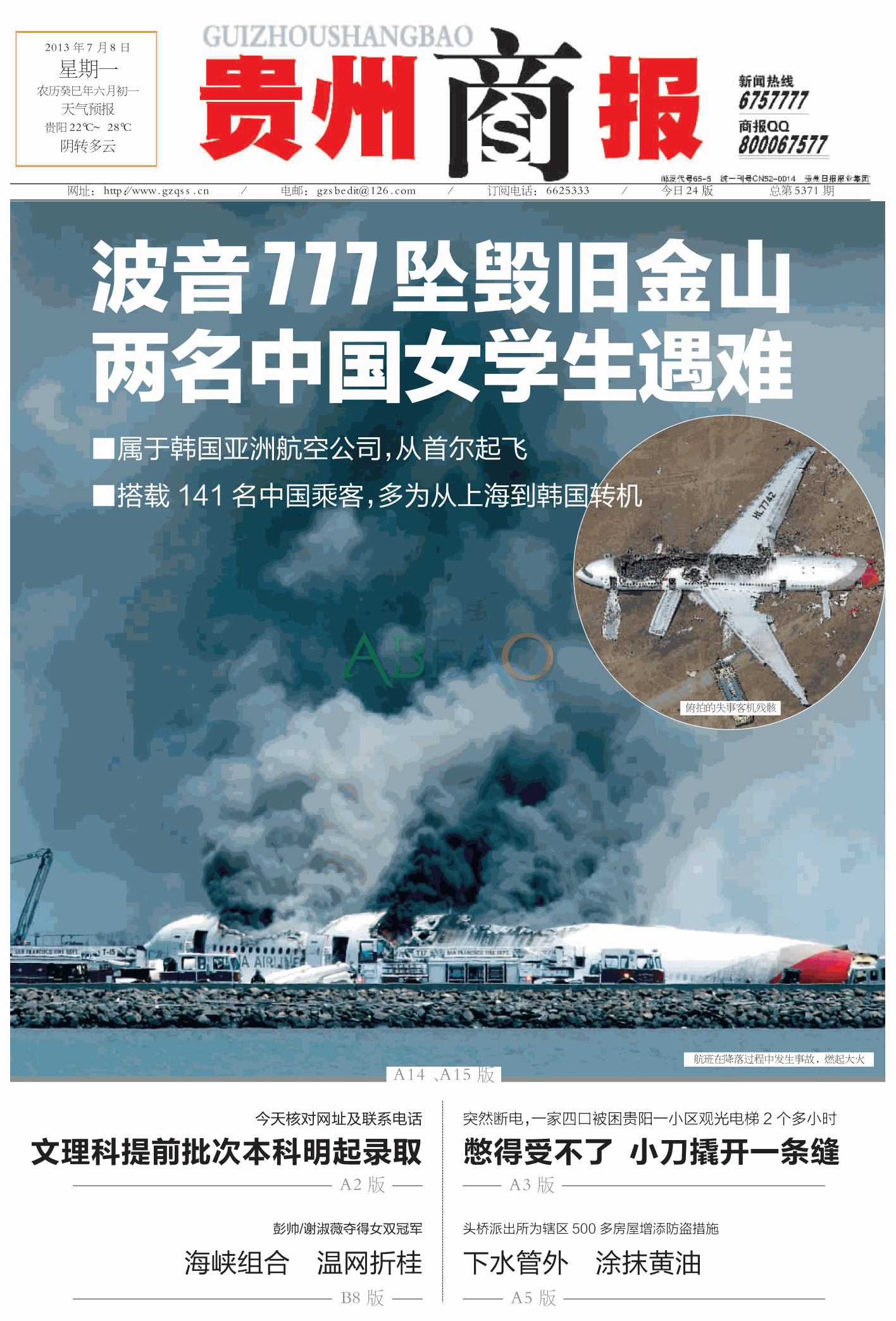
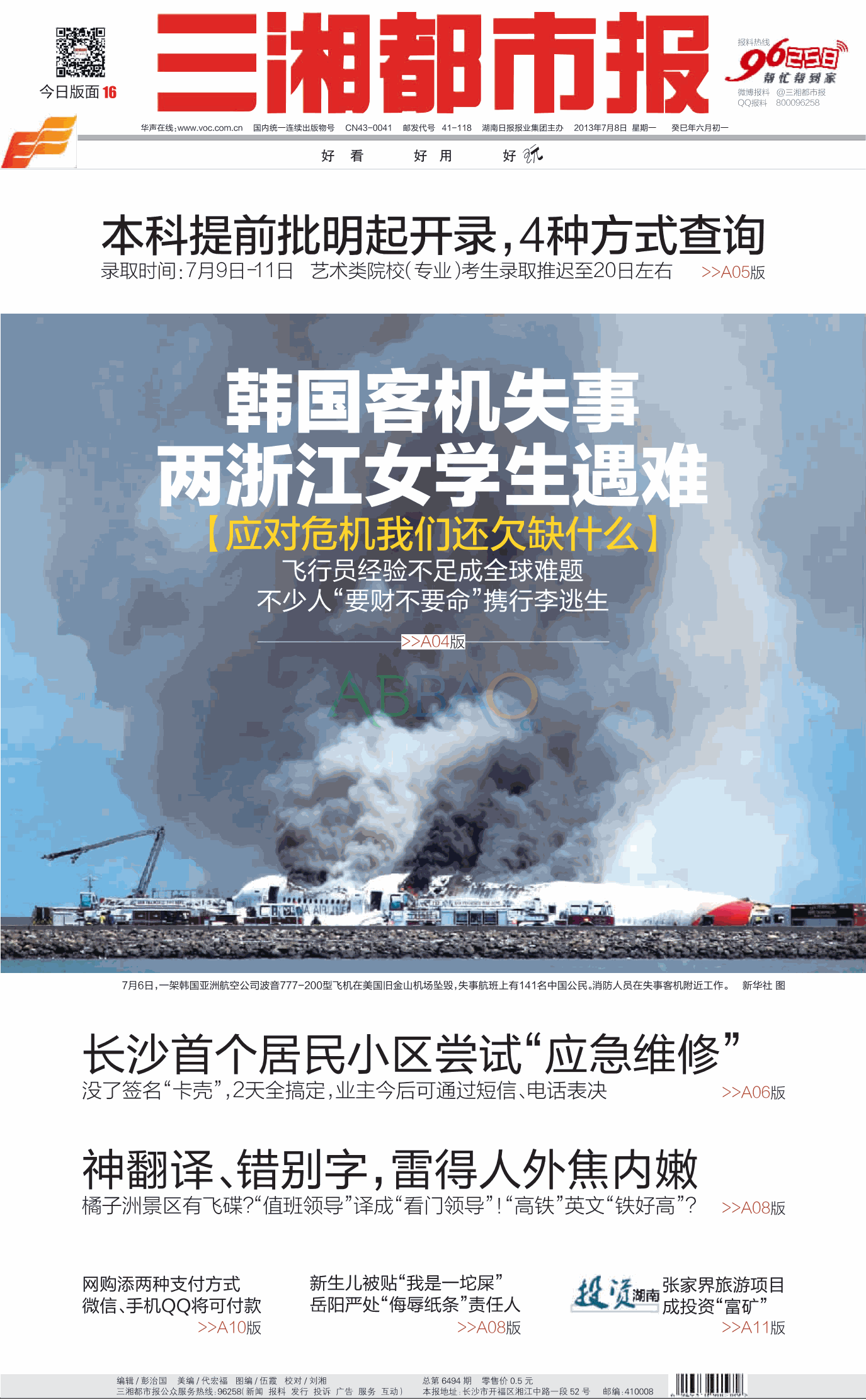
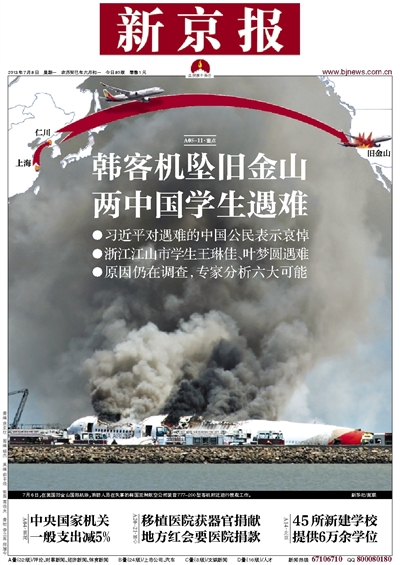
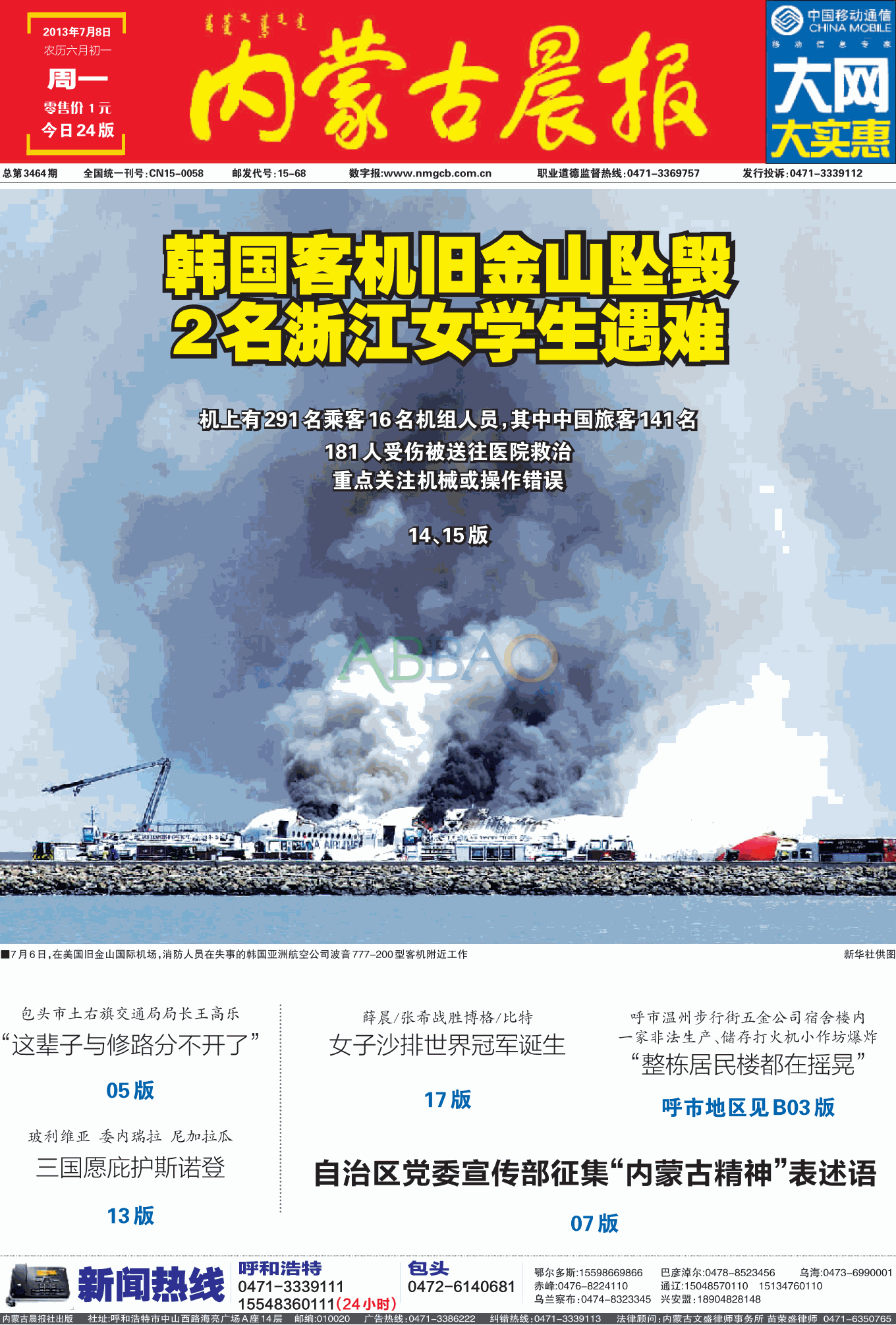
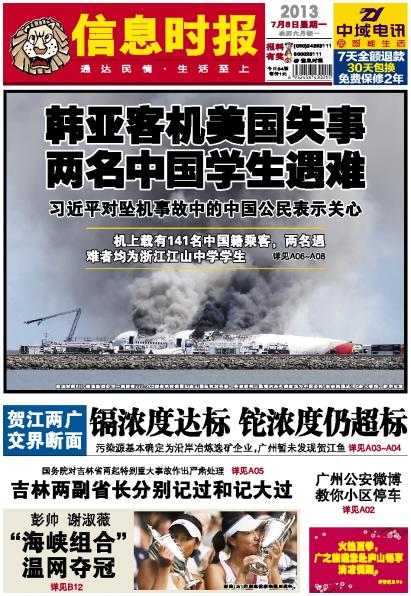
Yesterday’s tragic plane crash in San Francisco is nearly dominant on China’s front pages today, and particularly highlighted is the death of two Zhejiang middle school students in the crash. According to China’s official Xinhua news agency, the two girls, Wang Linjia 王琳佳, 17, and Ye Mengyuan 叶梦圆, 16, both students at Jiangshan Middle School in Jiangshan 江山, Zhejiang, were traveling to America along with twenty-eight other first-year classmates to participate in their school’s summer English camp. According to foreign media, both girls appear to have been ejected from the tail of the Boeing 777 when Asiana flight 214 clipped the runway at San Francisco International Airport. One of the girls may even have survived the fall, only to be killed by a fire-truck racing to extinguish the burning aircraft.

Coverage of the crash on China’s front pages today is mostly uniform and short on details, but surprisingly, newspapers in Zhejiang – the home province of the two victims – didn’t have the plane crash prominent on their front pages, opting to run with the story of the suicide of an apparently drunk, sandal-wearing climber instead.

Much of the detailed information of the death of the two girls outlined above was absent from Chinese newspapers today. The gallery below illustrates the strikingly similar coverage of the incident across Chinese newspapers. Most reports contained only the total number and occupations of the Chinese travelers aboard the plane and a description of the crash itself. Front pages displayed only slight variations of the headline “Korean Airliner Crashes in San Francisco: Two Zhejiang Female Students Killed” (韩客机旧金山坠毁:两名浙江女生遇难), often above identical pictures.

Zhejiang media reacted to the death in a variety of ways. Jiangshan Online 江山在线, a news portal located in Wang Linjia and Ye Mengyuan’s hometown, provided a chronology of events in the city from the moment that the crash was announced. Details included a vigil at Jiangshan middle school as parents and other family members awaited news overnight, an enigmatic QQ status posted by a classmate – “Let’s not cry, everyone is together, we’ll be OK” (不哭好吗?大家都在一起。我们会好好的!) – as well as a city official’s reception of official confirmation of the deaths of Wang and Ye.

Surprisingly, the crash did not make it onto the front pages of several newspapers in Zhejiang. In Wenzhou 温州, the Wenzhou Metropolis Daily 温州都市报 and Wenzhou Business Daily 温州商报 both reported the death of an apparently drunk, sandal-wearing climber in Juxi 莒溪 Canyon on their front pages, relegating the news of the crash to a sidebar.

China’s netizens, however, were much more united and vocal in expressing their sympathy for the plane crash victims. Wang’s final post on Weibo, “go”, received 7,275 “likes” and 27,078 comments as of midday on Monday, with most commenters writing “一路走好”, the Chinese equivalent of “Rest in Peace”. The contents of Ye’s Weibo aroused considerable consternation for its readers: her final post eerily reads “444444”, the word “four” being a near-homophone for and often associated with the word “death” in Chinese, while a similar gloominess permeates other posts in the days leading up to her departure. However, most of the 20,411 comments on her final post, like those on Wang’s final post, simply read “一路走好”.

Links and Sources
San Francisco Chronicle : SF plane crash: Victim may have been run over
Jiangshan Online 江山在线: 江山中学学生在事故现场拍摄的照片
Wenzhou Metropolis Daily 温州都市报: 模拟穿越莒溪大峡谷找寻小温的蛛丝马迹
Wenzhou Business Daily 温州商报:一台州驴友坠落瀑布身亡
The Weibo Account of Wang Linjia: 王琳佳
The Weibo Account of Ye Mengyuan: 叶梦圆

Posted in Front Page of the Day | Tagged | Comments Off on San Francisco plane crash and the death of two Chinese girls

Qingdao cops chase Tibetan Mastiff

20130704qdzb

The Qingdao Morning Post 青岛早报 reported in a front-page story yesterday that in the early hours of July 3,  a stray Tibetan Mastiff ventured onto the Qingyin highway in Qingdao. From 3 until 11 am, local policemen made seven attempts to capture the dog, but in the first six encounters, the dog triumphed over his pursuers. But even after their sixth failure, the policemen did not give up and found the dog once more in a wooded area next to a toll booth at the entry to Qingdao Airport. There, according to the paper, the “Battle of Mastiff against Man” ensued. After a fight lasting two hours, six police officers captured the dog.

Tibetan Mastiffs have become status symbols for many rich Chinese in recent years, but they are large, aggressive and difficult to look after.

Above the photo illustrating this story is the headline: “PM2.5 main culprits: dust and coal”. The story says that Qingdao city environmental officials have identified dust (kicked up from urban construction sites), smoke from coal burned by power stations and for heating, amd car emissions as the worst sources of PM2.5 particles, i.e. pollutants smaller than 2.5 micrometers in size believed to be most hazardous to human health.

Other Chinese newspapers also featured dog stories yesterday.

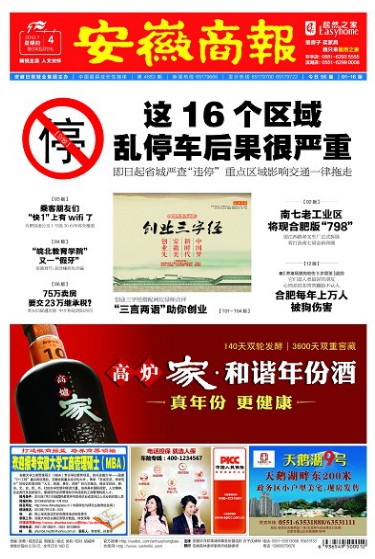
20130704ahshbIn other dog news, the Anhui Business Daily 安徽商报 printed a front page headline noting that 10,000 people in Hefei, the provincial capital, are bitten by dogs every year, and that the majority of these bites occur during the summer for the following reason: “As we come to summer, people wear fewer clothes and pets succumb to an angry disposition.” The newspaper cited the example of one Tong Tong, a four-year-old girl who went to pet a dog that was lying by a small tree while playing at a park with her grandmother. In an instant, the dog had bitten Tong Tong, who was then rushed to hospital by her grandmother. According to Hu Lin of the Hefei Center for Disease Control Innoculation Clinic, she was just one of around three hundred people who came to be vaccinated that day after being bitten by dogs.

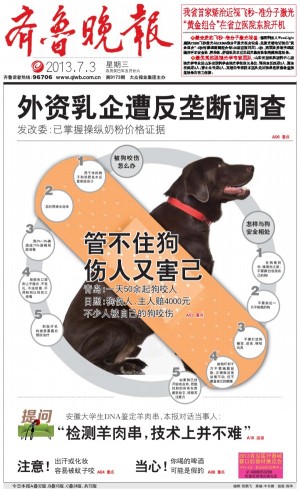
20130703qlwbThe Shandong provincial newspaper Qilu Evening News 齐鲁晚报 published a front page info-graphic showing ways to minimize the risk of infection after a dog bite: First, one must clean the wound with a clean brush and soapy water. The soapy water should then be cleaned off the wound with clean water. Then, use iodine of between 2% and 3% or alcohol of 75% purity to kill off any bacteria. After this, don’t close up the wound but rather seek medical attention.

Links and sources
Qingdao Morning Post (青岛早报): 流浪藏獒闯入青银高速 司机连续7次报警
Anhui Business Daily (安徽商报): 合肥每年上万人被勾上海
Qilu Evening News 齐鲁晚报 管不住够伤害人有害己

Posted in Consumer Culture, Front Page of the Day, Health and Medicine | Tagged | Comments Off on Qingdao cops chase Tibetan Mastiff

This is the Wuhan riot police

Wuhan Wanbao 2Jul

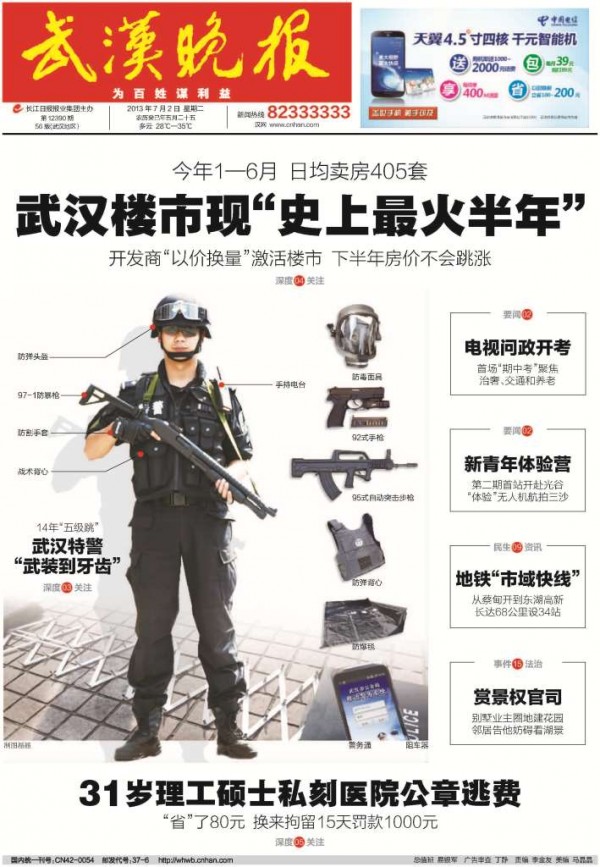
The Wuhan Evening News today informs us what some girls in Wuhan, Hubei province, exclaimed yesterday when they saw the newly-arrived riot police in full kit: “How handsome!”, and “I feel so safe now!”

The black-clad, “handsome” and impressively armed riot police that apparently so impressed the girls formally launched their station in Wuhan yesterday with a patrol in 14 locations in the city. So the front page of the Wuhan Evening News (武汉晚报) today displays a member of the city’s riot police in full kit under the headline “Wuhan riot police (特警) armed to the teeth”, and outlines in detail the tasks assigned to the riot police and the gear that each member carries.

The main headline on the newspaper’s front page today reports that the real estate market in Wuhan has seen the fastest growth ever in the last six months, with an average of 405 units sold daily.

Each of the seven central districts in Wuhan now has its own riot police patrol vehicle, and each vehicle has three riot police members attached to it. As a person involved with the riot police explained to the newspaper, the responsibilities of the riot police are largely to deter terrorist violence, to handle cases of extreme violence or other emergencies, and to act as a first rapid response force once any problems occur.

In 14 years, the newspaper informs us, the gear used by the Wuhan riot police has “jumped” in quality by five grades. Back in 1999 the riot police had only one gun for every three members, but the first “jump” occurred in 2003 when every member was allocated a truncheon, a self-defense tool, handcuffs, a pistol, a handheld transmitter, and ammunition. The second jump occurred in 2004 when Wuhan’s 70 patrol vehicles were increased to 100. Then in 2008 each member was issued with nine new devices: a digital camera, a recording pen, a rope, a baton, a medical kit, a flash light on the shoulder, warning tape, a luminous vest, and equipment boxes. The fourth “jump” occurred in 2012 when the street platforms housing police officers were enlarged and expanded; and then finally this year the quality of the weaponry and patrol vehicles were improved.

So as the newspaper’s front page illustrates today, each riot police member currently carries the following kit (including no less than three firearms):

  • Bullet-proof helmet
  • Bullet-proof vest
  • Gas mask
  • Tactical vest (战术背心)
  • Cut-resistant gloves
  • 97-1 shotgun, Chinese-made
  • Type 92 pistol, Chinese-made
  • Type 95 automatic assault rifle, Chinese-made
  • Handheld transmitter
  • Communication device
  • Explosion-proof blanket
  • Car obstruction device

Links and sources
Wuhan Evening News (武汉晚报): 武汉特警装备14年“五级跳”; 武汉特警昨起街头武装驻巡

Posted in Front Page of the Day | Tagged | Comments Off on This is the Wuhan riot police

Chinese Dream? American Dream?

china dream

This article is by Chris Marquis and Zoe Yang, Associate Professor and Research Associate of the Harvard Business School. An edited and translated version was published as “中国梦?美国梦?” (literally “Chinese Dream? American Dream?”) in the June 2013 issue of China Economic Report (《中国经济报告》 of the State Council Research Center. The full Chinese text is here, and an English summary is on Civil China, a new website by the authors of this piece.

Comparing the American dream with the new Xi Jinping buzzword Chinese Dream (or China Dream), Marquis and Yang use data mined from Sina Weibo by social media analytics firm Crimson Hexagon to answer the question: What do Chinese people, at least those on the Internet, talk about when they talk about the Chinese dream?

“The great Chinese dream,” President Xi Jinping said during a speech at the National Museum’s “Road to Revival” exhibit on November 29th, two weeks after his appointment to General Secretary and Commander-in-Chief, “is the great rejuvenation of the Chinese nation.” No phrase in recent Chinese history has captured the imagination so quickly and completely; the phrase has gained significant momentum in recent months as state media launched a series of “Chinese Dream” campaigns, including essay contests, performances, and other Party-sanctioned Dream activities at schools and work units across the nation. Yet, there is also much debate as to what the Chinese Dream encompasses. Is it about the collective achievement of the Chinese nation, or rather, like the American Dream it evokes, a vision of individual achievement?

Perhaps such a tension should not be surprising, given the same questions surround the older American Dream. As generally understood, the American Dream is shorthand for the individual opportunity that exists in America, but if we delve deeper, there are more profound connotations. Founded on principles embedded in the Declaration of Independence, the American Dream also implies democracy, freedom, and individual rights. Thus, by evoking the American Dream, Mr. Xi may be inviting unintended comparisons.

How do the current perceptions of these national Dreams compare? Many scholars and journalists have interpreted Mr. Xi’s words to mean that the Chinese Dream is a collective vision, which contrasts with the American Dream as an individual one.1 Our analysis of Sina Weibo posts from 11/1/2012 to 5/6/2013 using Crimson Hexagon text analysis software2 suggests that both these interpretations are too simplistic. Both Dreams have collective and individualistic elements based on each nation’s unique circumstance. Understanding these commonalities helps shine light on important unmet needs in these societies. We find that while the Chinese Dream is truly a collective dream, for Chinese citizens, achieving the “great revival of the Chinese nation” is less about raising China’s stature on the global stage, but more about resolving contemporary collective concerns, including steep economic inequality, environmental degradation, and food safety issues.

National Dreams: For Whom?

By definition, national dreams necessarily have a collective element, especially when used as a political tool. In contemporary interpretations, the American Dream implies that through individual achievement comes collective greatness. As articulated by President Barack Obama, “the history of the United States, the reason we became an economic superpower is because, not always perfectly, not always consistently, but better than any other country on Earth, we were able to give opportunity to everybody. That’s what the American Dream was all about.”3 Indeed, even though American’s current president often portrays himself as an individual example of the American Dream realized, he is careful to stress that the Dream is a collective enterprise. The American Dream is frequently articulated by politicians as a promise the government owes its people. For example, Obama’s 2008 campaign platform was entitled, “Barack Obama’s Plan to Reclaim the American Dream.”4

But it wasn’t always so. In a similar spirit, John F. Kennedy Jr. famously said in his inaugural address, “ask not what your country can do for you – ask what you can do for your country,” and cultivation of civic duty became one of the hallmarks of his presidency. Mr. Xi’s Chinese Dream seems to fall more in line with this line of thinking. Though “the great revival of the Chinese nation” is itself vague, the state media-driven Chinese Dream campaigns have exhorted citizens to play their part in realizing the Chinese Dream. “Only when the country does well, and the nation does well, can everyone do well,” ran an editorial in Qiushi Journal on May 1st, “The more the individual struggles to realize the common dream, the broader the space for the realization of individual dreams becomes.”5 Other mentions in official literature emphasize “socialism with Chinese characteristics,” patriotism, innovation, hard work, and a strong military as requirements of the Chinese Dream. Thus, the Chinese Dream is not just a collective dream, but state-oriented: collective greatness comes from individual effort.

But there is not necessarily direct correspondence between what a politician means and what citizens interpret, especially when borrowing a concept already so laden with connotations. As one Weibo user put very succinctly, “Xi Jinping’s Chinese Dream has nothing to do with our dreams.”6

Prominent scholar and prolific Weibo user Yu Jianrong compares the Chinese Dream with the American Dream thusly:

The American Dream refers to the dream of the American people, of which the protection of individual rights is the basis; the Chinese Dream is the dream of the country, of which the strengthening of the country’s rights is the premise.7

He reiterates the notion that Mr. Xi’s Chinese Dream is not only a collective project, but more importantly, a project explicitly for China, the nation state. But although Chinese people may understand Mr. Xi’s vision, do they accept it? Or do they claim the Chinese Dream for themselves, individually and en masse?

Using the Crimson Hexagon’s ForSight social media listening tool to analyze Weibo posts, we grouped microblogs about the Chinese Dream as either associated with the nation-state or associated with the people.8 We then split each group into propaganda-influenced posts and non-propaganda-influenced posts9 to better discern “official” interpretations versus “independent” interpretations of the Chinese populace.

1

We found that as hypothesized, netizens largely associate the Chinese Dream as a vision for the people, comprising over 41% of microblogs. Posts associating the Chinese Dream with the Chinese nation-state only accounted for 23% of total posts,10 and interestingly, these were almost evenly divided between propaganda-related posts and non-propaganda related posts. Looking closer at the non-propaganda related posts, we found that many had to do with foreign affairs, particularly recent disputes with Japan. Relating to the outside world, it seems, is the major instance when Chinese people take a nationalistic view of the Chinese Dream.

For example, a popular post reblogged over 9,000 times reads:

The precise meaning of the Chinese Dream: 1. The UN relocates to Beijing; 2. Premier Li Keqiang inspects Taipei with the assistance of Provincial governor Ma Ying-jeou; 3. The Chinese National Football Team wins the FIFA World Cup and gains possession of the World Cup trophy for the first time ever; 4. Beijing accidentally bombs the Pentagon and expresses regret; 5. Aircraft carrier Liaoning returns to Hawaii to replenish supplies; 6. The stock index surpasses the million-point mark this week; 7. RMB becomes the sole international currency; 8. Increasing cases of Americans illegally immigrating to China in recent days!11

Though clearly jesting, this post, an excerpt from a longer list posted on Kaoder.com, sums up China’s aspirations for political and economic dominance on the international stage – a dream of comeuppance voiced colloquially.12

On the other hand, posts that are explicitly related to propaganda activities voice more collective visions and involve personal responsibility – what one can do to help China realize the Chinese Dream. These include posts about rallying around victims of the Ya’an earthquake and Lei Feng, Communist Good Samaritan.

Many also call on Chinese youth to carry out the Chinese Dream. Yet even the most casual observation of Chinese youth will reveal that the majority of them are not politicized. Could it be that Weibo users pay lip service to official narratives while maintaining more independent dreams?

Dreams of the People, For the People

“Realizing the ‘Chinese Dream:’” 1. Respect each individual’s dreams and pursuits. The Chinese Dream encompasses national and individual dreams – one cannot simply use the term “Chinese Dream” as a replacement for each person’s individual dreams. 2. Proactively seek the common ground between the “Chinese Dream” and each individual’s dreams and pursuits. The “American Dream” united all Americans, standing together through thick and thin. This is the model we need to learn from to realize the Chinese dream.13

What do people really dream about when they allow themselves to dream? We hypothesized that non-propaganda related Chinese Dream posts would reveal a different set of desires, but that they wouldn’t necessarily be the same as those promised by the American Dream. Having seen that netizens tend to frame the Chinese dream for Chinese people rather than the state, we further believed that most Chinese individuals still maintain collective dreams rather than personal ones. To test our hypothesis, we did a separate analysis that searched for “我的中国梦” (My Chinese Dream) on Weibo, excluded all propaganda-related posts, and grouped the rest into categories of Personal, Political/Economic, and Civic.

Personal posts were explicitly individual; political/economic posts included mentions of political reforms such as democracy, legal, or economic reform, as well as nationalistic sentiments regarding foreign policy and the military. Finally, Civic captured mentions of inequality, food safety, environmental issues, education, and other social goods.

Excluding state media driven posts, which made up 47% of the total volume, the remaining posts support our hypothesis, with 61% of posts reflecting civil society concerns. Personal and political dreams each only accounted for around 20% of total Dream-related conversations. While some did express desires to be rich, other users, linking or quoting a Bloomberg Businessweek China Edition article from April 19th entitled ”Chinese Dream Defeats American Dream” are actually scornful of the American Dream’s individual scope:14

Recently, the term “Chinese Dream” spread like wildfire in the streets, as if every intellectual conversation without mention of the term were carried out in vain. The commonplace manifestation of the “American Dream” is simple by comparison: having a house, a car, and two children. This small individual dream cannot compare with the final objective of the grandiose and world-shaking Chinese dream: to achieve the grand restoration of the Chinese nation.15

2

The most significant finding is that the most prevalent posts by far are those that express an interpretation of the Chinese Dream based firmly in bettering Chinese society as a whole: correcting inequality, ensuring free education for all, improving the quality of food, air, and water. In this sense, the Chinese Dream is truly both individual and collectivist.

“The commoner’s Chinese Dream:” 1. Education without tuition; 2. Employment without guanxi; 3. Doctors that don’t sell medicine; 4. Food without poison; 5. News without lies; 6. Professors with wisdom; 7. Government officials without bribery; 8. Police that do not abuse citizens; 9. Those who strip naked do not gain celebrity; 10. Those who brag do not become famous; 11. Homes that don’t get demolished; 12. The people don’t fear authority; 13. Environment without pollution; 14. Leadership without special treatment.16

A 10-year-old’s Chinese Dream: 1. Wake up every morning to safe milk and crullers fried without drainage oil; 2. Go to school without needing to wear masks for filtering PM 2.5; 3. Parents do not force children to go to tutoring centers, sacrificing their childhoods to get into Beijing and Tsing-Hua Universities; 4. Teachers do not accept gifts, treating each student equally; 5. Streets do not have cars with special permission to run red lights; 6. Television shows that are not always about love triangles, with characters collapsing all over the place; 7. Being able to write the truth in essays without receiving 0s; 8. Grown-ups live lives as human beings and not beasts17

Do National Dreams Lose their Luster Up Close?

Given this variety of interpretations of the Chinese Dream, we found that in our sample of posts about the Chinese Dream, only around 50% of Weibo users associated positive feelings with the phrase. Corresponding with the beginning of official “China Dream” campaigns in March and April, however, not only did the total volume of Dream-related posts increase, attitudes became more positive, reflecting the large number of Weibo posts that are propaganda-related or propaganda-driven.

3

4

With the American economy in recession, inequality worsening, and Congress locked into ever uglier political wrangling, many Americans are losing faith in the American Dream.18 According to various polls, like the Chinese, only about half of Americans now believe in the American Dream. One recent poll conducted by the Pew Economic Mobility Project showed that only 39% of Americans who are NOT unemployed believe they will achieve the American Dream in their lifetimes.19 These days, in America, the phrase is just as likely to be used in irony as in earnest.

Perhaps the American Dream has gotten away from the politicians who use it as a unifying symbol of hope. In its founding days, the American Dream emphasized individual rights, but with the rise of conspicuous consumer culture in past decades, popular understanding has diverged from lofty ideals. As much as Mr. Obama may emphasize that the Dream is a collective promise of ensuring everyone has the same rights, his people are quicker to point to Wall Street and Hollywood. In other words, the American Dream has been transformed from individual rights into individual achievement (specifically, of wealth), to the near exclusion of collective opportunity. Even in its most modest iteration – “two cars, two kids, and a house” – today’s American Dream is too tangible, too consumption-oriented, and thus impossible for any politician to promise and all too easy to disappoint.

But it appears that national dreams only lose their luster up close. While both Chinese and Americans are split on their own countries National Dreams, perhaps reflecting a deep cynicism or disillusionment with each country’s current state, our analysis also showed that the Chinese people have overwhelmingly positive associations with the American Dream over the same span of time, though the number of mentions is far fewer.

5

Many posters even make explicit comparisons between the Chinese Dream and the American Dream to show how the American Dream is better (often using very cynical jokes).

The American Dream has 6 basic criteria: own a house, own a nice car, be college educated, have retirement security, have medical insurance and vacations. The Chinese Dream only has one criterion: become a Party official.20

American person: We Americans all have an American Dream. Chinese person: What is the American Dream? American: It is to live in a free, equal, and democratic country, using one’s own hard work, courage, creativity, and will to march towards prosperity, without relying on help from certain privileged classes. Chinese: We also have a Chinese Dream.

American: What is that?

Chinese: Use whatever means possible to cheat suckers out of their money, and then immigrate to the US.21

An interesting question is thus: why do Chinese people respond so positively to the American Dream despite Americans’ own ambivalence? Our theory is that Chinese people derive a lot of their knowledge about America from Chinese immigrants, who tend to be more financially successful and happier with America than Americans in general. A study by Pew Research on Asian Americans supports this view, finding that Asian Americans, compared with all Americans, have the highest median income and are more likely to hold a bachelor’s degree. They’re also more likely to believe in the value of hard work, with 69% agreeing that “most people who want to get ahead can make it if they work hard,” as opposed to 58% of the general American public.22 Perhaps most tellingly, Asians cite “opportunity to get ahead” as the number one reason why life in the US is better than in their native countries.

In other words, Asians in America, of which Chinese make up the plurality at 23.2%, believe in the American Dream.

It makes sense, then, that Chinese-American success stories trickle back to China, where they take hold in the popular imagination. The American Dream, it seems, is still a beacon for immigrants.

Indeed, if we look at emigration statistics,23 particularly among China’s elite, we find that immigration from China to the US has only increased in recent years, even as China has undergone major economic growth and modernization. According to the 2012 China International Immigration Report, of Chinese citizens with assets of over 100 million yuan, 27% had emigrated abroad and another 47% were considering doing so.24

These elites, who have already achieved personal wealth and comfort, create an interesting puzzle: if wealth and comfort are not enough to keep people in China, then what is the Chinese Dream? What do people really want?

Common Dreams of the People

A key commonality between the Chinese Dream and the American Dream is that both are used by citizens to justify outrage at inequality and lack of social mobility. In China, the anger and cynicism on display in Weibo posts indicate that people firmly place the responsibility of realizing the Chinese Dream in the government’s hands, and the fact that such social ills exist already indicate failure. Indeed, some citizens reject the very notion of a Chinese Dream as laughable, given certain realities.

Get rid of “black prisons” before discussing the “Chinese Dream!”25

A country that can’t even guarantee safe milk formula for the next generation should not be talking about some “Chinese Dream.”26

In America, an economically developed, democratic country with the rule of law, the American Dream takes many things for granted. The American Dream isn’t about political freedom, free public education, or clean air and safe food, because those things already exist. Americans have the luxury of dreaming for themselves. While there certainly are people on Weibo calling for democratic freedoms, our findings show that most Chinese Dreams inhabit a middle ground, where individual comforts are made possible by less controversial political and legal reform. This middle ground is the development of civil society.

Surveys of Chinese immigrants support our findings: when asked for their primary reasons for investing and emigrating overseas, respondents frequently cited better education opportunities, better social welfare, and better living conditions.27 It appears that for those Chinese who have realized the American Dream in China have found that they’re still eating the same tainted food and breathing the same polluted air as everyone else. If Mr. Xi wants to keep wealth and talent from leaving the country, he must articulate a Chinese Dream that makes people want to stay in China.

Furthermore, his Chinese Dream must be appealing in way that is distinctly different from the American Dream. That Chinese people seem to want more than riches is a great thing – America has already shown how easily the national dream can be used to justify greed and selfish consumption to disastrous ends. Some Chinese already see the danger of following America down this path:

The Chinese have been exposed to the Americans and their freedom, and learned to max out their credit cards. Facing a financial black hole, they borrowed from the whole world without repayment, dreaming a Chinese version of the American dream, or is it the American version of the Chinese dream? We have forgotten how to even dream, so now we can only dream everyone else’s dreams?28

If the endgame of the American Dream is financial collapse, this user asks, what should the Chinese Dream be? Without a true guiding vision, are the Chinese people simply left to dream in the dark? The Chinese people deeply desire a collective Chinese Dream, but that dream cannot afford to be just another empty political slogan, nor can it afford to be just an imitation of the American Dream. Unless the government meets their needs for a civil society encompassing environmental protection, food safety, quality education, and other shared rights, the Chinese Dream may slip from their grasp, just as it’s slipping away from Americans.


About the authors:

Chris Marquis is an Associate Professor at Harvard Business School. His teaching, research and consulting focus on corporate environmental and social strategies. More information on his research can be found at www.chrismarquis.com.

Christopher Marquis (孟睿思), Associate Professor Harvard Business School
cmarquis@hbs.edu

Zoe Yang is a Research Associate at Harvard Business School. She previously worked as a qualitative analyst at McKinsey & Company before moving to China to learn traditional Chinese cooking.

Zoe Yang (杨一婧), Research Associate Harvard Business School
zyang@hbs.edu

Marquis and Yang recently established the website www.civilchina.com as a forum to provide research and commentary on social, environmental and civil society issues in China.


End notes:

1. Xiaoying, Q. 2013. The Chinese Dream vs. The American Dream, China US Focus.com: http://www.chinausfocus.com/political-social-development/the-chinese-dream-vs-the-american-dream/ : China-United States Exchange Foundation.

2. Crimson Hexagon. 2013. ForSight™ Platform: http://www.crimsonhexagon.com/forsight-platform/.

3. Horsley, S. 2012. Obama’s Own Story Defines His American Dream, American dreams: then and now: http://www.npr.org/2012/05/30/153994202/obamas-own-story-defines-his-american-dream : NPR.

4. Obama’08 Campaign. 2008. Barack Obama’s Plan to Reclaim The American Dream: http://obama.3cdn.net/c16add4876056665c7_i42mvyxby.pdf : Obama or America.

5. China Copyright and Media. 2013. The Chinese Dream Infuses Socialism with Chinese Characteristics with New Energy: http://chinacopyrightandmedia.wordpress.com/2013/05/06/the-chinese-dream-infuses-socialism-with-chinese-characteristics-with-new-energy/.

6. 习近平的中国梦,和我们的梦没有任何关系。”2013年03月29日 02:51

7. “美国梦是指美国人的梦,保障个人权利是基础;中国梦是国家的梦,强化国家权力是前提。”2012年12月07日 16:32

8. We initially separated collective and individual associations, but there were not enough “individual” posts to run the tool

9. Links and reblogs of state media articles and microblogs; links and reblogs of statements by CCP officials; reblogs and responses to Party-related handles; reblogs and responses to Chinese Dream campaign activities sponsored by local Party branches, work units, or schools.

10. The vague/unclear category captured posts where it was difficult to discern a specific leaning. Most of these were propaganda-related posts promoting China Dream activities

11. “中国梦的确切含义:1、联合国总部迁到北京;2、李克强总理在马英九省长陪同下视察台北;3、国足喜夺世界杯,首捧大力神;4、中方就误炸五角大楼向美方表示遗憾;5辽宁舰返回夏威夷基地补给;6、沪指本周突破百万点大关;7、人民币成为唯一国际结算币种;8、近期发生多起美国公民偷渡中国事件!”2013年04月27日 07:24

12. 【一乐】zhongguo梦的含义: http://www.kaoder.com/?m=thread&a=view&fid=11&tid=66520

13. 实现“中国梦”】1、尊重个人的梦想和追求。“中国梦”涵盖了民族梦想和个人梦想,不能简单地用“中国梦”替代每个人的个人梦想。2、积极寻求“中国梦”和每个人的梦想和追求的结合点。“美国梦”把所有的美国人团结在一起,风雨同舟,荣辱与共。这是我们实现“中国梦”所需要借鉴的。2013年04月17日 18:30

14. 撰文,吴澧.2013.中国梦“完胜”美国梦.Bloomberg Businessweek: http://read.bbwc.cn/NC8zNC86Njc1.html

15. “这一阵,中国梦火了大街。真真是开谈不说中国梦,读尽诗书也枉然。美国梦的常见表达相对简单:有房有车,两个孩子。这种个人小梦,显然“无可比拟”于气势磅礴、震天撼地的中国梦终极目标——在2049年之前,达成中华民族的伟大复兴.” 2013年04月17日 16:11

16. “【老百姓的中国梦】网传老帖: 1、上学不收费;2、就业不求人;3、医生不卖药;4、食品不带毒;5、新闻不说谎;6、教授不白痴;7、当官不受贿;8、城管不打人;9、脱裤不走红;10、吹牛不出名;11、房子不强拆;12、百姓不畏权;13、环境不污染;14、领导不特权。”2013年04月19日 22:28

17. “10岁孩子的中国梦:1)每天早上喝到安全奶和吃没地沟油的油条;2)不用戴防PM2.5口罩上学;3)爹娘不逼着上补习班,玩命上北大清华;4)老师不收礼,公平对待每个同学;5)街头不再有特权车闯红灯;6)电视上别老搞三角恋,动不动跪倒一大片;7)作文说真话不被判零分;8)大人都活出人样不是人妖.” 2013年05月11日 17:57

18. Karabell, Z. 2012. American Dream May Have Waned for Some, But Lives On for Many, The Daily Beast: http://www.thedailybeast.com/articles/2012/07/03/american-dream-may-have-waned-for-some-but-lives-on-for-many.html : The Newsweek/Daily Beast Company LLC.

19. Pew Charitable Trusts. 2013. Pew’s Economic Mobility Project: http://www.pewstates.org/projects/economic-mobility-project-328061.

20. “美国梦有6个基本标准:有房、有一部好车、接受过大学教育、有退休保障、有医疗保险以及有休假时间。中国梦只有一个标准:当官。”2013年04月16日 18:44

21. 美国人:我们美国人都有一个美国梦。中国人:什么是美国梦?美国人:就是生活在一个自由、平等、民主的国家里,通过自己的勤奋工作,用勇气、创造和决心迈向繁荣,而非依赖于特定的社会阶级和他人的援助。中国人:我们也有中国梦。美国人:那是什么?中国人:用尽一切手段骗傻逼们的钱,然后移民美国。2013年05月13日 23:30

22. Pew Research Center. 2013. The Rise of Asian Americans: http://www.pewsocialtrends.org/2012/06/19/the-rise-of-asian-americans/ : Pew Research Social & Demographic Trends.

23. Huang, H. 2013. Allure of United States Remains for Emigrating Chinese, The Atlantic: http://www.theatlantic.com/china/archive/2013/04/allure-of-united-states-remains-for-emigrating-chinese/275180/ : Atlantic Media.

24. 王辉耀。2013. 《中国国际移民报告2012》综述。FT 中文网:http://www.ftchinese.com/story/001048547

25. “扫除黑监狱,再谈中国梦!”2013年05月14日 10:15

26. “一个国家,连下一代的安全奶粉都搞不定,还谈什么中国梦”

27. Huang, H. 2013. Chinese Emigrants: China Still Land of Opportunity, But Life Better in US, Tea Leaf Nation: http://www.tealeafnation.com/2013/04/chinese-emigrants-china-still-land-of-opportunity-but-life-better-in-u-s/ : Tea Leaf Media, LLC.

28. “中国人偿过美国人和自由,然后像他们那样刷爆信用卡,面对金融黑洞,向全世界借债不还,做一个中国式的美国梦,或美国式的中国梦?我们连怎么做梦都忘 了,只能做人人做的梦?”2012-11-10 21:08

Posted in Internet and Media, Traditions | Tagged | Comments Off on Chinese Dream? American Dream?

Terrorist attack and murderous rampage

JA01624C

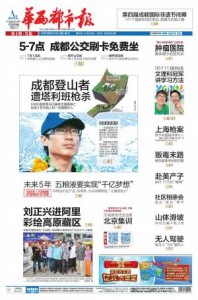
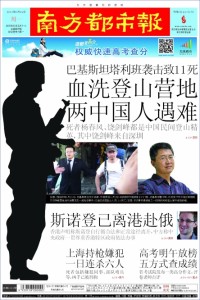
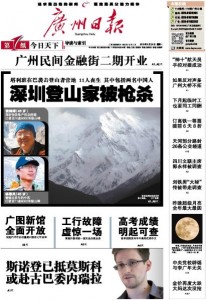
At almost exactly the same time – around midnight on Saturday evening 23 June – two heinous acts occurred. The one was a terrorist attack in Pakistan that killed 11 people, including two mountaineers from China; and the other was a murderous rampage with a shotgun in Shanghai that killed six people. Thus on this Monday there’s mayhem on the front pages of many of China’s newspapers (apart from a few that decided to sidestep the murder and terror entirely and go for something like the Gaokao results instead, e.g. Chongqing Economic Times). See below for galleries.

Terrorist attack
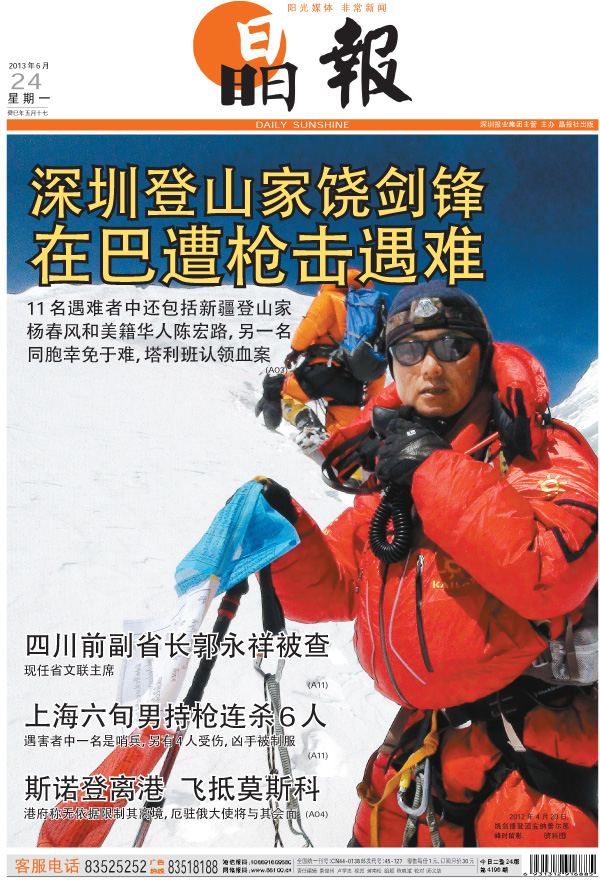
The featured image is today’s front page of the Daily Sunshine (晶报) from Shenzhen, which reports that two Chinese mountaineers were among 11 people killed by the Taliban in a terrorist attack late Saturday night at Nanga Parbat, the ninth-highest mountain in the world in the Himalayas in Pakistan. The two men killed were renowned mountaineers Yang Chunfeng (杨春风) from Xinjiang, and Rao Jianfeng (饶剑锋) from Shenzhen. A third man in their party, Zhang Jingchuan (张京川), was able to escape. The attack was perpetrated by 10-12 men wearing police uniforms, who arrived in the middle of the night and stormed the mountain camp where the mountaineers were staying. They roused everyone from their sleep, stole their valuables, and then opened fire. Zhang Jingchuan ran for his life, hid in a ravine, and later made a satellite call to alert the authorities.

Here are three more front pages today that carried the Pakistan terror story:

Murderous rampage
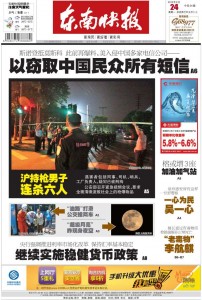
The South East Express (东南快报) from Fujian province today explains that a 62-year-old man, the director of a chemical company in Baoshan (宝山) in Shanghai, went on a shooting rampage with a shotgun on Saturday evening because of a dispute with a contractor. It appears that things began to go wrong at a meeting that was taking place at the factory on Saturday evening. At some point a dispute went from being a war of words to a deadly fight in which the director beat the contractor to death. He then got hold of a shotgun and asked his driver to take him somewhere. On the road he killed the driver, before returning alone to the factory, where he killed a guard at the gate of a nearby military barracks and took his gun. He then killed another three people at the factory, before police arrived and were able to subdue him. In all he killed six people and injured four.

Here are three more front pages today that carried the Shanghai rampage story:

Links and sources
Daily Sunshine (晶报): 深圳登山家饶剑锋巴基斯坦遭袭遇难
South East Express (东南快报): 上海62岁持枪男子连杀六人

Posted in Front Page of the Day | Tagged | Comments Off on Terrorist attack and murderous rampage

David Beckham’s visit to Shanghai university ends in chaos

Beijing Chenbao 21June [IMAGE MISSING]

Global football superstar David Beckham is in China again in his new capacity as ‘global ambassador’ for Chinese football. Yet when he arrived in his Bentley for a promotional event on a Shanghai university campus yesterday, he proved too hot to handle for the large and excited young crowd at Tongji University.  The front page of the Beijing Morning Post today shows a bleeding official being carried away for medical attention after being trampled when thousands of students rushed forward to get a look at Little Bei 小贝, as he is affectionately described in the Chinese media. Amid the chaos, Beckham soon departed and the event was cancelled.

Just after lunchtime yesterday, Beckham arrived on the campus of Tongji University in a Bentley. Students lined the streets on campus in his honor. As his car approached the sports field where he was to participate in a promotional activity, guards had to clear away people so his car could approach the entrance. But there were so many students in attendance that the guards felt compelled to close the main gate to the sports field. Once Little Bei appeared, the crowd became excited and chaos ensued when the students rushed the fence, causing five or six people to be injured, although none critically. The activity that he was supposed to have participated in on campus was immediately cancelled. Later one of the journalists noted that a stack of shoes and backpacks had been left strewn behind in front of the fence.

According to eyewitnesses, there were around four or five thousand people in attendance, and when Beckham arrived many tried to push forward to see him with their own eyes. Some tried to climb up trees or walls, while others rushed to the entrance where Beckham appeared. Three police officers and two security guards were trampled. Beijing Morning Post also says that two students were lightly injured, one of which was from Japan.

Later in the day when he had heard of the injuries, Beckham posted messages of support and a quick recovery for the injured on his Weibo. In March this year Beckham was in China to be appointed as a “global ambassador” for Chinese football. For administrators of the game in China, Beckham forms part of an attempt to raise enthusiasm for the game in China where decades of scandal and corruption have alienated many fans.

Links and sources
Beijing Morning Post (北京晨报): 小贝造访同济引发踩踏事故
Beijing News (新京报): 小贝访沪引发踩踏事件

Posted in Front Page of the Day | Tagged , | Comments Off on David Beckham’s visit to Shanghai university ends in chaos