
As defined standard dictionaries, the word has two meanings: (1) a noun, someone who accompanies guests at the behest of the host; (2) a verb, to entertain guests.
In common usage, however, the term 陪客 is also used when a prostitute entertains a client. Beijing Times reported earlier this week that a customer at the Wangfujing Xinhua Bookstore was offended when the copy of Collected Yaowen Jiaozi (咬文嚼字全集) he bought for his child contained this third definition in addition to the first two. The customer asked, “Why, when Collected Yaowen Jiaozi is itself a reference text meant to correct readers’ pronunciation and understanding of words, would it contain such a blunt, indelicate explanation?”
The Beijing Times article provided the following muddled summary of the book’s explanation:
The “easily confused heteronyms” section of Complete Yaowen Jiaozi (published by New World) explains the difference between the noun and verb uses of 客 in the word 陪客: the noun 客 has a neutral tone, and is defined as someone invited by the host to accompany guests; the verb 客 has a fourth tone, and it has two definitions – one, to accompany and service guests; two, by a prostitute, to service clients.
Mr. Shi Ning, editor in chief of New World Publishing House responds: This book was first published in September 2006. It was written by Li Yizhi. In regard to the definition “service of clients by a prostitute” for 陪客, this definition does indeed exist in everyday language; but whether it is appropriate for this definition to appear in a reference work will require further discussion. I will refer this matter to the editors.
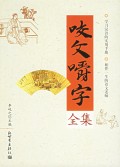
This is nothing we haven’t seen before: last summer there was a flap over the inclusion of “prostitute” among the list of definitions of 鸡, “chicken,” in certain dictionaries. But this is the second time that media attention has turned to Collected Yaowen Jiaozi: the book has previously been accused of infringing on the completely unrelated Yaowen Jiaozi magazine’s title and look – not only does “collected” imply that the text is drawn from another source, but the cream and pastel cover is similar to Yaowen Jiaozi‘s annual bound volumes (compare the image above to the cover of the the 2005 edition of the magazine).
To make matters worse, Collected Yaowen Jiaozi isn’t particularly reliable. A blogger has pointed out an unsettling number of inconsistencies, misprints, and outright errors in the first fifty pages. The magazine has a considerable reputation in matters of language usage, and Shanghai Youth Daily speculates that the errors in the Collected text might harm that reputation among readers who aren’t aware of the distinction between the two. Editor Shi Ning defended his book’s title to Shanghai Youth Daily by pointing out that “yaowen jiaozi” is a common Chinese expression meaning “excessive verbalism”: “Just because they’ve registered it as a trademark, other people can’t use it? I don’t think that’s beneficial to the spread of culture?”
The magazine’s lawyer laughed off this defense as “absurd”: “As a common noun, yaowen jiaozi still enjoys ‘reasonable use’ by other people after its registration as a trademark. ‘Prominent use’ is restricted….the cover of Collected Yaowen Jiaozi is a classic example of ‘prominent use’ – yaowen jiaozi is printed large and ‘collected’ is printed so small that there is no question that the trademark has been infringed.”
- Beijing Times via Sina (Chinese): Differences in dictionary definitions of “peike”
- Shanghai Youth Daily (Chinese): Errors in the title-infringing Complete Yaowen Jiaozi mislead children
- ESWN: Chickens, ducks, and Thai transvestites
- Image from Dangdang
- Earlier on Danwei: Animals in the dictionary