
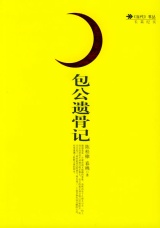
Chen Guidi and Chun Tao have a new book out, The Remains of Magistrate Bao (包公遗骨记). This husband-and-wife team wrote Chinese Peasants: An Investigation.
Magistrate Bao was an official during the Song dynasty, legendary for his honesty and fairness. During the Cultural Revolution, his tomb was moved when a steel plant needed to build a new lime kiln. Because of the politics of the time, his remains were not permitted to be reburied, and his descendants had to bury them secretly.
In an article based on an interview with the authors, The Beijing News hails their “new book”, yet strangely fails to mention the book they are most famous for. There is only one small reminder that these two authors have written anything else:
Chen Guidi explained that as early as three years ago they thought of writing this book, but because of the publication of another book, it was only this year that they could finish writing The Remains of Magistrate Bao.
Otherwise, Chinese Peasants: An Investigation is neither mentioned nor referenced.
Below are some of Chen Guidi’s remarks, translated from the interview in TBN.
“In the course of our investigation, we found many stories that would make you sigh, stories that would bring you to tears, stories that would make you strike the table in amazement, and stories that would make you bristle with anger. These stories were outside of the plan for our original investigation, so we wrote them into this book.”
“Through hundreds of years and innumerable wars, Magistrate Bao’s tomb and remains were kept whole. It was only in peacetime that construction completely destroyed them. The remains of this honest official, who was praised by the people and upright his entire life, had no place to be buried. After the Cultural Revolution, the government of Hefei wanted to rebuild Magistrate Bao’s tomb, but unfortunately by that time the people who had secretly reburied his remains had already died. We might never find them.”
“In the course of our investigation and writing, my wife and I always kept a few problems in mind. We believe that in the story of Magistrate Bao’s remains there are many things that present valuable warnings. So The Remains of Magistrate Bao is also a book that reflects on present reality.”
“How could that era produce an honest official like Magistrate Bao? Why were his remains not worthy of preservation in peacetime? Why are so many of us to this day unaware of the story of his remains? All of these questions deserve our consideration.”
“In Hefei there is a well that belonged to Magistrate Bao that was covered over during construction. At the time, a leader said ‘It doesn’t matter. Later on we’ll dig a new one in some other place.'”
Edited, image added 2009.10.09.
- The Beijing News via China Finance: No place to bury the remains of Lord Bao
- Image from Dangdang
- Earlier on Danwei Investigation: Peasants in the spotlight, Chinese Peasant Study primer