
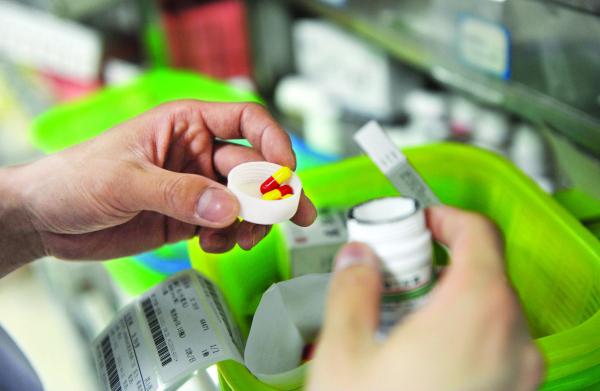
Economic Information Daily (经济参考报), a business newspaper published by Xinhua News Agency, ran a story on November 17 reporting that the National Development and Reform Commission (NDRC) may soon release a list of drugs that must be sold at low prices in China with the aim of reducing the financial burden of medical care on citizens and hospitals. The list may have a significant impact on the pharmaceutical industry: some out-of-production low-cost drugs will be protected and return to the market, while the makers of high cost drugs on the list will have their profit margins squeezed. The article also predicts that the pharmaceutical industry may soon see another round of mergers and acquisitions.
“Low-cost drugs” refers to the cheaper of the drug options used to treat a particular medical condition. The article quotes an informed source as saying that NDRC is expected to set the standard for low-cost drugs at a daily average cost of three yuan for western drugs and five yuan for processed Traditional Chinese Medicine (中成药, sometimes called “Chinese patent medicine”). The criteria and the list will be reviewed and adjusted every two to four years.
Low margins have been the primary cause that discourages pharmaceutical companies from selling low-cost drugs. As a result, hospitals are sometimes unable to obtain low-cost drugs, leaving patients with no choice but to buy more expensive alternatives.
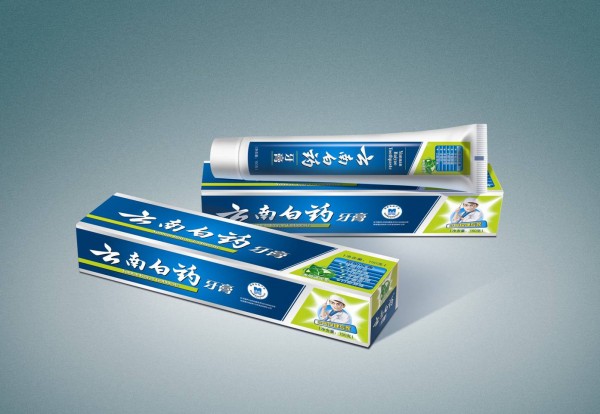
The NDRC policy is likely to be welcome to generic drug makers are concerned, but it is bound to hurt companies that focus on high-cost drugs. The Economic Information Daily reports that industry insiders believe that generic makers such as Shanxi Yabao Pharma, Beijing Tongrentang, North China Pharma, Baiyunshan Pharma , and Yunnan Baiyao will benefit while Johnson & Johnson, GlaxoSmithKline, Merck, and other producers of out-of-patent drugs will be negatively affected.
“Makers of insured drugs will hopefully see a change to their dismal state of affairs. Once companies see stable incomes, further market consolidation will follow. Some companies that are not in the industry or preparing to withdraw may merge to achieve economies of scale in production and distribution,” according to an “industry insider” quoted by the report.
The report also quotes Shi Lichen, general manager of the healthcare center of Alliance PKU Management Consultants saying that “the cap of three yuan and five yuan per day is essentially price insurance for pharmaceutical companies. As a result, many large low-cost companies may ramp up production.” Many small companies will have a very good chance to grow, and many will see their market cap increasing. And those smaller companies, previously overlooked in M&A, who hold production permits for generic drugs may become sought-after acquisition targets.
Companies and brands affected
Shanxi Yabao Pharma (SHA:600351)
Beijing Tongrentang (SHA:600085; HKG:8138)
North China Pharma (SHA:600812) (SHA:600085; HKG:8138)
Baiyunshan Pharma (SHA:600332; HKG 00874)
Yunnan Baiyao Group (SZ:000538)
Johnson & Johnson (NYSE:JNJ)
GlaxoSmithKline plc (NYSE:GSK)
Merck & Co. (NYSE:MRK)
Links and sources
经济参考报: 发改委拟出台低价药清单1.16万亿市值药企面临变局
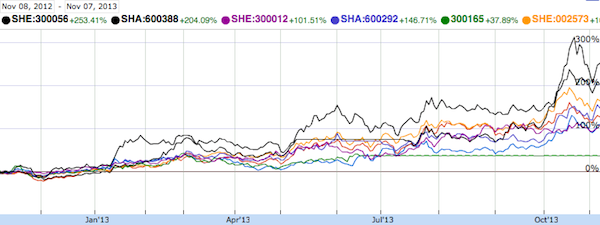
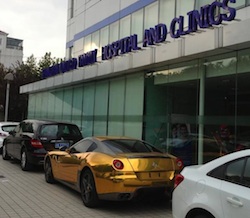 Following Guangzhou Bayunshan Pharma’s announcement that it plans to invest five billion yuan in high-end hospitals and a strong rally in the health care sector in China’s A-share market last week, several newspaper articles have appeared beating the drum for investing in so-called “private hospital concept stocks”.
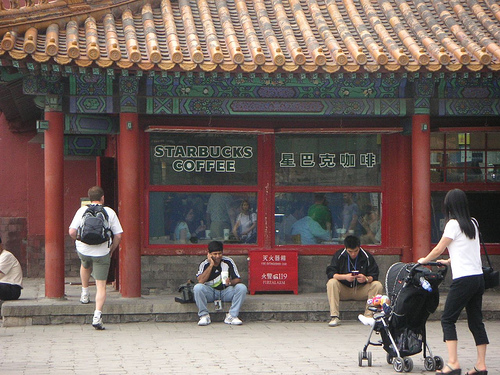 On October 8, China Business News, a publication owned by SMG, a media conglomerate controlled by the Shanghai city government, published a report attacking Starbucks’ high prices in China. On October 20, China Central Television (CCTV) broadcast a story targeting the high prices of Starbucks coffee and mugs. The stories have been repeated in different versions in various media outlets.
 Beijing Times 京华时报 yesterday published an article (based on a report in the CCTV 1 program Focus Interview 焦点访谈) analyzing the profit chain of spam texts sent by China’s three leading telecommunication operators. According to the report, many spam texts are sent from numbers starting with 106, and such numbers can only be used by China Mobile, China Unicom and China Telecom. Such numbers were originally for internal and work units’ use only, but in recent years the big three telecom operators have provided bulk spam sms services to all-comers and profiting accordingly.
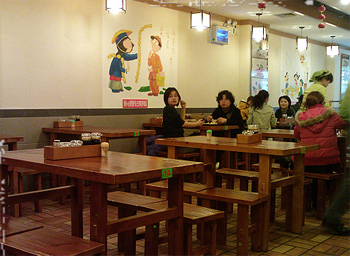 According to a Southern Daily 南方日报 report, Wang Huiying (王惠英), vice inspector of the “Trade in Services and Commercial Services Department” of Ministry of Commerce, revealed that the Ministry is seeking to lower the business tax rate for restaurants from the current level of 5% to 3%. Speaking at a recent restaurant industry conference, Wang also said that the ministry also seeks to lower the fees that banks charge for credit card transactions.