
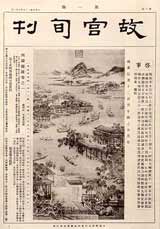
The Forbidden City is officially and blandly known as the Palace Museum. The story of how it became a public museum during the chaotic first half of the China’s 20th Century is the subject of the latest issue of the online magazine China Heritage Newsletter, produced by the Australian National University.
This corner of Chinese history is illuminating for a number of reasons, but perhaps best summarized in the China Heritage Newsletter thusly:
Chinese politics remained highly fluid during the years following the 1911 Revolution: warlords were in the ascendancy in Beijing; the victory of the revolution was far from decisive, and the presence of the abdicated emperor lent weight to the possibility that the monarchy could readily be restored.
Many of the politicians and other individuals who facilitated the establishment in 1914 of the Government Museum (Guwu Chenliesuo, renamed the Neiwubu Guwu Chenliesuo in 1916) were motivated primarily by the need to occupy the palace space, specifically the ceremonial halls of the outer court and thereby thwart any restoration of the monarchy.
- China Heritage Newsletter: The Transition from Palace to Museum: The Palace Museum’s Prehistory and Republican Years