
One of the joys of travelling to a different city is visiting new and interesting bookstores. Whether or not you make any purchases, there is something about the unfamiliar layout and slightly varied selection that is particularly exciting. Of course, this goes double if the bookstore is in a different country.
Chen Pingyuan, a well-known professor of Chinese at Peking University, takes inspiration from the rows of cheap paperbacks in the bookstores of Jimbocho Street in Tokyo to argue that Chinese books need to lose weight.*
Remembering “Small Books”#
by Chen Pingyuan / CN
This topic could also be put as “How books should lose weight.” Book printing today is getting increasingly beautiful, truly “on-track internationally.” But whenever scholars from Hong Kong, Taiwan, or foreign countries gush over the amazing speed of progress in China’s publishing industry, when they extoll the books as more exquisite and beautiful than their own, I always feel a bit uneasy.
It cannot be denied that over the past ten years, Chinese books have made great strides in binding and presentation; what I am concerned about is that behind this luxuriance is an intense pursuit of the cover price. Publishers are hard at work to be big, but what they are driving at is cover price and not profit. The entire situation is a crass mode of operating, like the way our industry chases raw materials; look at the GDP – these actions cover over a multitude of hidden problems. As the variety of books increases, the total printing numbers actually decreases. In my view, if the total readership numbers does not increase – that is, if the effective reading time of the populace does not change – then a reduction of the number of titles by 2/3 would cause no problems at all. Of course, this is just an illustration, not a recommendation that GAPP control book license numbers, since that sort of cutting might just end up axing the kinds of reading material that is most needed by the public. How can you guarantee that it won’t be the bad money that chases out the good? Therefore I won’t say anything about reducing the number of titles.
What I can talk about is another, closely related type of “weight loss.” In my opinion, the excessive bulk of books is a major problem afflicting China’s publishing industry. Today, when deciding on awards, judges usually tend toward the thick and heavy – since you and I have no time to read them carefully, we can only look at heft. 100,000 characters is certainly no match for 1,000,000 characters; such a thick book definitely took a lot of effort. This has expanded to become a widespread habit – it seems like academic works of less than 400,000 or 500,000 characters are simply not to be found.
Remember that Zhou Zuoren’s Origins of China’s New Literature, published in 1932, was just 50,000 characters or so. Qian Zhongshu leveled some criticism at Zhou’s book, but he still admitted, “This is a small, valuable book. Like all good books, it not only gives readers a systematic presentation of the facts, but gives readers much to contemplate.” Calling Zhou’s book “systematic” is a little much, but saying that it gives readers “much to contemplate” is quite accurate – even today, this book is read, critiqued, and cited. Today’s monumental works, however, do not have many willing readers. The readers can’t be blamed for being lazy; writers are also part of the cause – who asked you make your book so uninteresting? I’m not demanding that scholars appear on TV to do academic lectures, but I do hope that in the course of writing that they can pay a bit more attention to editing and resist the trend toward seeking victory through volume.
I recall in the 1980s when Li Zehou’s The Path of Beauty had just come out, someone pointed out a number of trivial mistakes. Reportedly, Feng Youlan had this to say: This is a great work. When I heard that, it was like a lightbulb went off in my head. Not only did I understand what Prof. Feng was emphasizing, that one should read a book for the general picture and not be too picky about the details, but more importantly, that a book being “big” or “small” did not depend on whether it was thick or thin. A volume of just one-hundred-thousand and some characters could also be called a “great book.”
But where are these “small, valuable books” today? I recall several years ago that the “Sanlian Selected Works” put out by Joint Publishing Co., the “Small books by Great Authors” series by the Beijing Publishing House, and the “Pocket Classics” published by the Shanghai People’s Press reportedly all sold quite well. But if you look carefully, those were all old books written by an earlier generation of scholars. Our generation seems to have gotten out of the habit of writing “small books.”
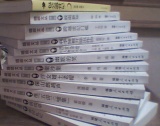
In spring 1994, I was a visiting scholar at the Japan Society for the Promotion of Science. I stayed at the University of Tokyo, and frequently went out to the Jimbocho book street, where I found much to think about. Later, in my essay series “Records of Studying in Tokyo,” I made particular mention of the “instructional paperbacks” that blanketed the bookstores. In Japan, “paperback” (新书) refers to a 42mo volume that is distinct from a “compilation volume” (单行本*). Their primary mission is to pursue “the popularization of expert knowledge”; this is the “modern education for modern people” extolled when the Iwanami Paperbacks were published [beginning in 1938]. Relevant topics suited to the needs of the readers, writers who could produce polished prose – small books coming out of major pens. Add to this the support and promotion of the publisher, and you end up with all sorts of paperbacks flourishing in Japan’s publishing sector. Last month I went to Tokyo for a meeting, and once again went to the Kinokuniya bookstore, in a new location, and as usual there lots of newly-published paperbacks, too many to take in. I can sum up this publishing strategy as follows: fast-paced, high-volume, easy reads. Compared to the most expensive “gift books” (most absurd being those gold-leaf books), these Japanese “magazine books”, with their low prices, relevance, and timeliness, are in my opinion more compatible with the reading tastes of modern urban residents.
For a number of years, I have in many different venues urged the publishing to do business in this kind of interesting paperbacks; at first there were some people who jumped at the chance to give it a try, but later they fell through. Why weren’t they sustainable? First, the government’s control on book registration numbers causes aprehension among publishers; some publishers even have written rules requiring each book number to generate a certain amount of money. Second, low book prices mean low profits, so there must be a large printing of a wide variety before profits can be expected. Third, we have become accustomed to doing all business in a single stroke rather than economizing for the long-haul. Printing only a small number of books each year requires long-term planning; our publishers are not sitting on huge cash reserves, and no one knows who’ll be in charge next year. Fourth, scholars are not used to this setup either, and have not learned how to explain their expert investigations to the public. Fifth, a readership with a broad vision, ready to pursue new knowledge at any time, looking for “reading” rather than “collecting” in book buying to the point of discarding the books when they are done – this group of readers had not yet come together.
Note 1: Oddly, a professor of mine at Beijing Normal University drew the exact opposite conclusion from the same books after his visit. His reaction was to scoff: “In China, we wouldn’t even call those ‘books’ – they’d be ‘pamphlets.'” He was more interested in China learning from Tokyo’s public works department, which locates utility access shafts at the sides of the road rather than every fifteen feet in the middle of traffic.
Note 2: tankōbon; in Chinese, 单行本 refers to any separate edition of a work previously published elsewhere as part of a magazine, anthology, or other multi-work volume.
- China Newsweek (Chinese): Remembering “small books”