
November 3, 2008
Guangxu, the second to last emperor of the Qing Dynasty (1644-1911), is best known for his unsuccessful attempt to modernize China by instituting reforms to the system of government in 1898. The so-called Hundred Days Reform aimed to adopt a constitutional monarchy.
The reforms turned out to be short-lived, just like the emperor himself. On November 11, 1908, the 37-year-old emperor died suddenly in the Summer Palace where he had been under house arrest since 1898, when the Empress Dowager Cixi launched a coup against him. Even though the death was officially announced to be caused by disease, it has been the subject of speculation.
Even in his own day, the cause of death was disputed. The emperor’s doctor’s diary recorded that Guangxu had “spells of violent stomach ache”, with his face turning blue. Such symptoms are consistent with arsenic poisoning. Actually, three persons were suspected behind the murder. The empress, her eunuch Li Lianying, and general Yuan Shikai, who betrayed Guangxu in the last days of the reforms and directly caused their failure.
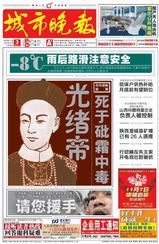
A new study aiming to find the truth behind the murder allegations has delivered its conclusions, right before the 100th anniversary of Guangxu’s death. A series of tests has established that the cause of Guangxu’s death was indeed arsenic poisoning, confirming a 100 year old rumor.
November 3, 2008
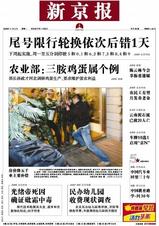
The Beijing News reported today that the tests, which took five years, show lethal doses of arsenic present in the emperor’s hair and clothes, which were retrieved from his tomb. The tested arsenic level is not only higher than normal, it is also higher than the level found in a mummified body of other people living in the emperor’s own time. It was also found that the arsenic levels in the roots of Guangxu’s hair were higher than at the tips, thus ruling out the possibility of chronic poisoning from long term arsenic intake from medicines.
The day after Guangxu’s death, his adversary and persecutor, the Empress Dowager Cixi, also died. Could it be that knowing she was in her last days, she gave the order to kill him so that he would not outlive her? Or was it general Yuan Shikai who feared that once the emperor resumed power, he would be the first one to be eradicated for treachery? Science has no answer for these questions.
Three years later in 1911, the rickety Qing Dynasty finally came to an end in the turmoil of revolution, but the modernization of the country, even today, is far from over.
- The Beijing News (Chinese): “Guangxu is confirmed died of arsenic poisoning”
- Wikipedia: “Hundred Days Reform”, “Guangxu Emperor”