
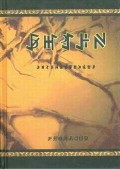
The 16th National Book Fair opened on 16 June in Xinjiang. Aside from typical stories about attendance statistics and the astounding sales of new releases (in this case, a new 10-volume edition of Wang Xiaobo’s complete works that sold 72 sets in 40 minutes), the media has turned its attention to minority language publishing.
Earlier this month, China News and Publishing Journal ran a three-part report on the history and present conditions of the country’s minority-language publishing industry. Part 3, “Problems Facing Minority Language Publishing,” is summarized below.
Some statistics: 200,000 titles are published each year in Chinese, while only 3880 titles are published in 23 written minority languages – just 1.94% of the Chinese selection. New releases make up 120,000 of the Chinese titles but just just 1000 of the minority titles – 0.8%. The ratio is even worse for children’s books – 10,000 titles are published each year in Chinese but just 350 in minority languages. Few of these are new releases.
Says a clerk at a bookstore in Xinjiang,
Minority groups have a great need for informative books in their own language concerning laws and regulations, as well as everyday guides to labor protection, social order, and traffic regulations. They ask about these books every time they come to the bookstore, but every time they go away disappointed.
Many of the books that do get translated are of questionable value. From the report:
The content and format of many of the books are far removed from the reality of the minority areas. Many are mechanically translated from the Chinese and do not fit with the reading habits and thinking patterns of minority readers. The problem of “opaque books” primarily stems from the fact that the editing of minority-language books is divorced from reality – copying and plagiarism is rampant, and relatively few publications consider the realities of production in minority areas or the reading level and intellectual framework minority readers; they aren’t very targeted.
Frequently, people are simply unable to connect with booksellers. Rural residents account for 82.6% of the total minority population, 7 points higher than the national average, and a large proportion live in scattered, low-density towns in the western part of the country. There may be a bookstores in the county seats, but very rarely in a small town or village. High book prices across the country mean that even those people who make the trek to a bookstore may not be able to afford more than one or two volumes, and the hassle of traveling so far keeps students from using the bookstore like a reading-room, as urban residents often do.
- China News and Publishing Journal via PDO (Chinese): Problems facing minority language publishing
- 16th National Book Fair (Chinese): homepage
- People’s Daily Online (Chinese): book fair channel
- Image from Sichuan Nationalities Publishing House